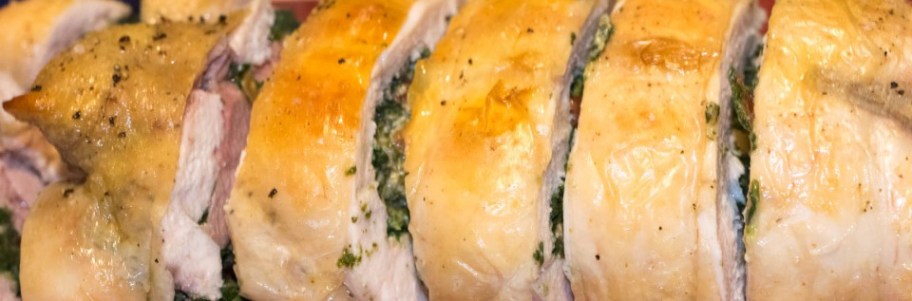
This is the third post on EconEats related to the humble pork belly. The other attempts at belly perfection have left me unhappy, with many unanswered questions such as: Is sous vide worth the wait? does brining make a difference? Shall I leave the skin on? How do I get crispy skin that is not tough? This post attempts to answer these questions.
The Brining Phase
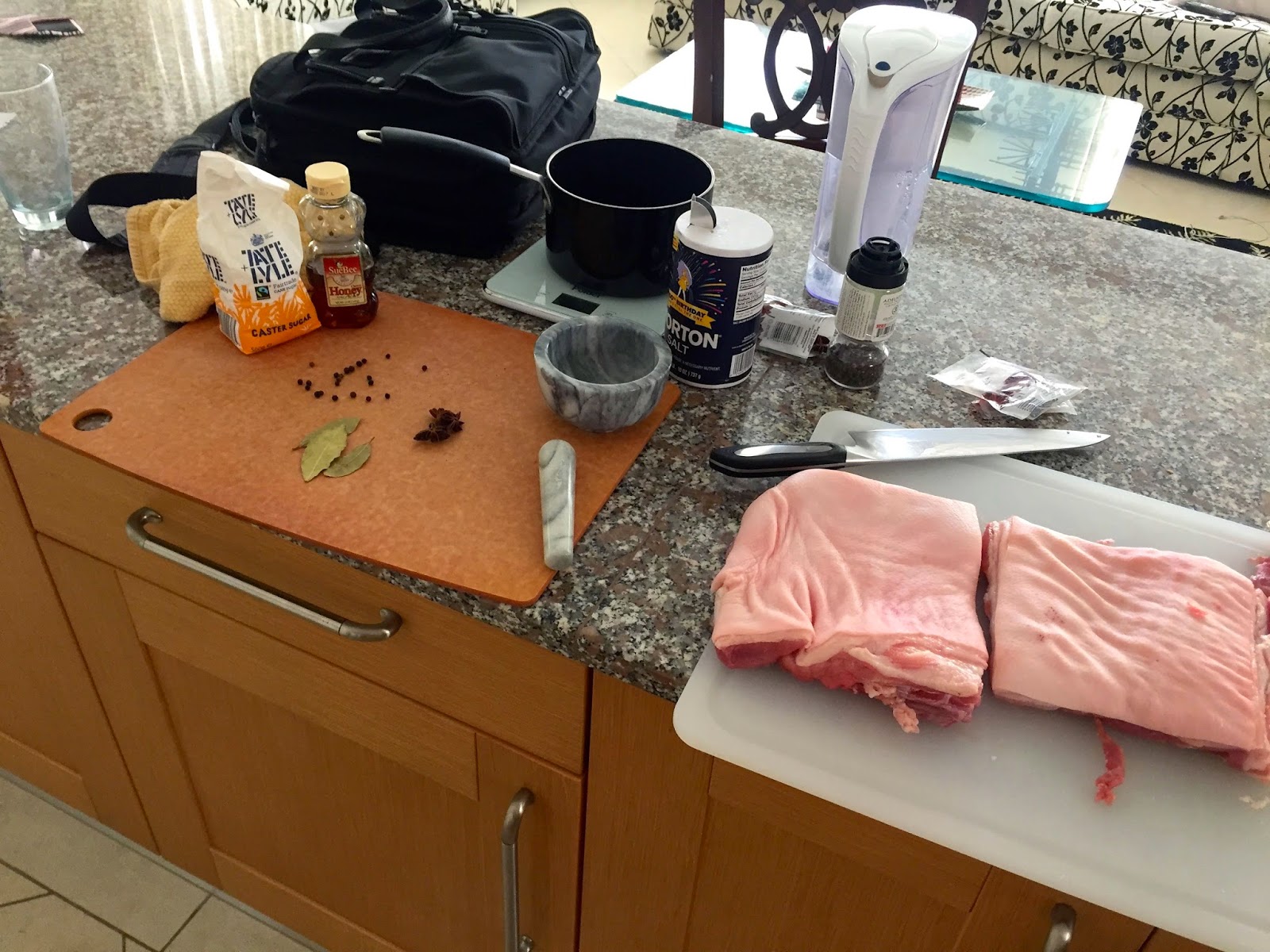
The brine aims to add flavor as well as introduce moisture into the pork. I used a five percent salt brine solution, with about one percent sugar, a good squeeze of honey, bay leaves, pepper corns, sweet smoked paprika and most importantly – star anise. The latter ingredients were ground up in the mortar and pestle then boiled on the stove for a few moments to fully dissolve the solids.


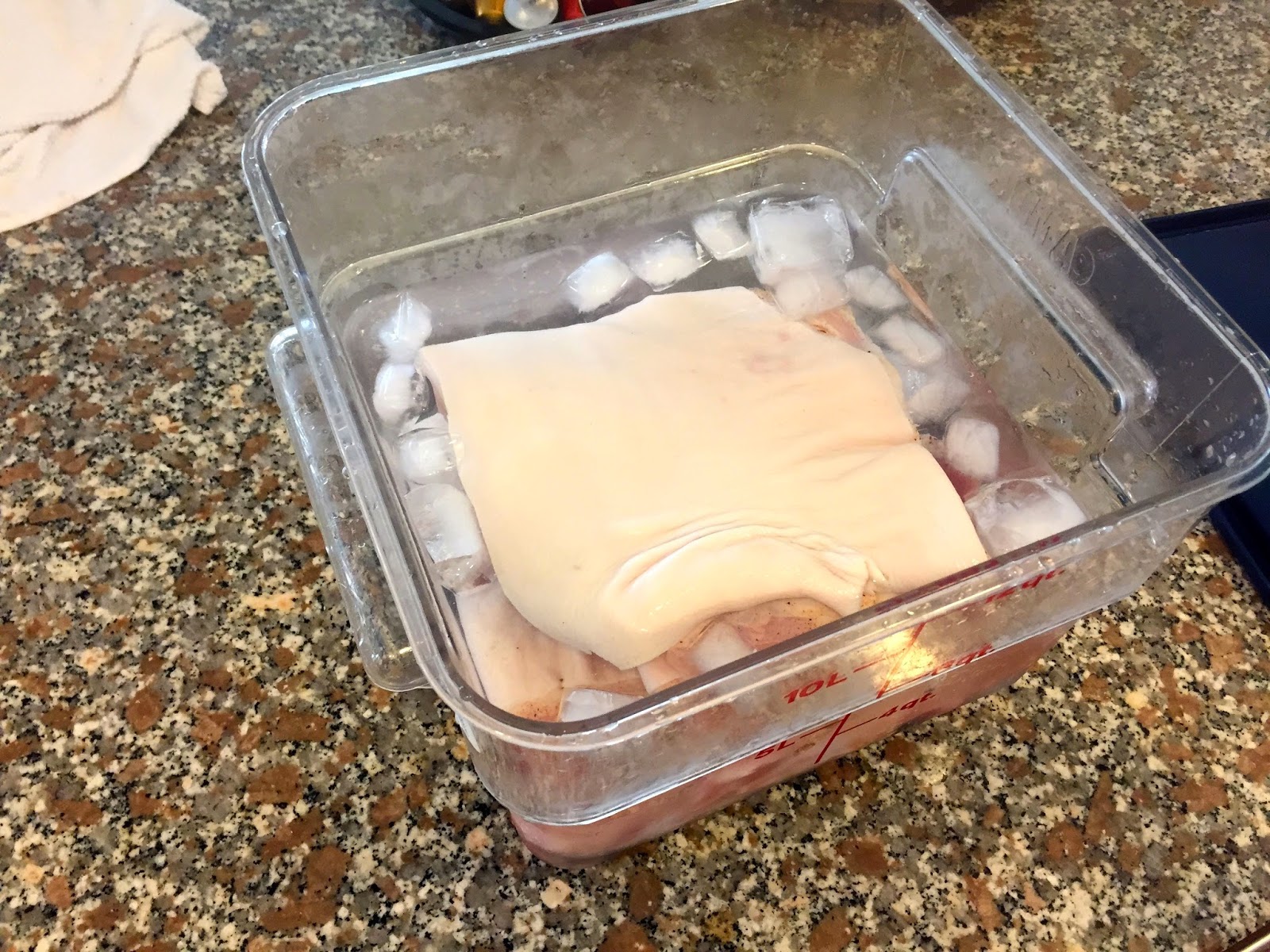
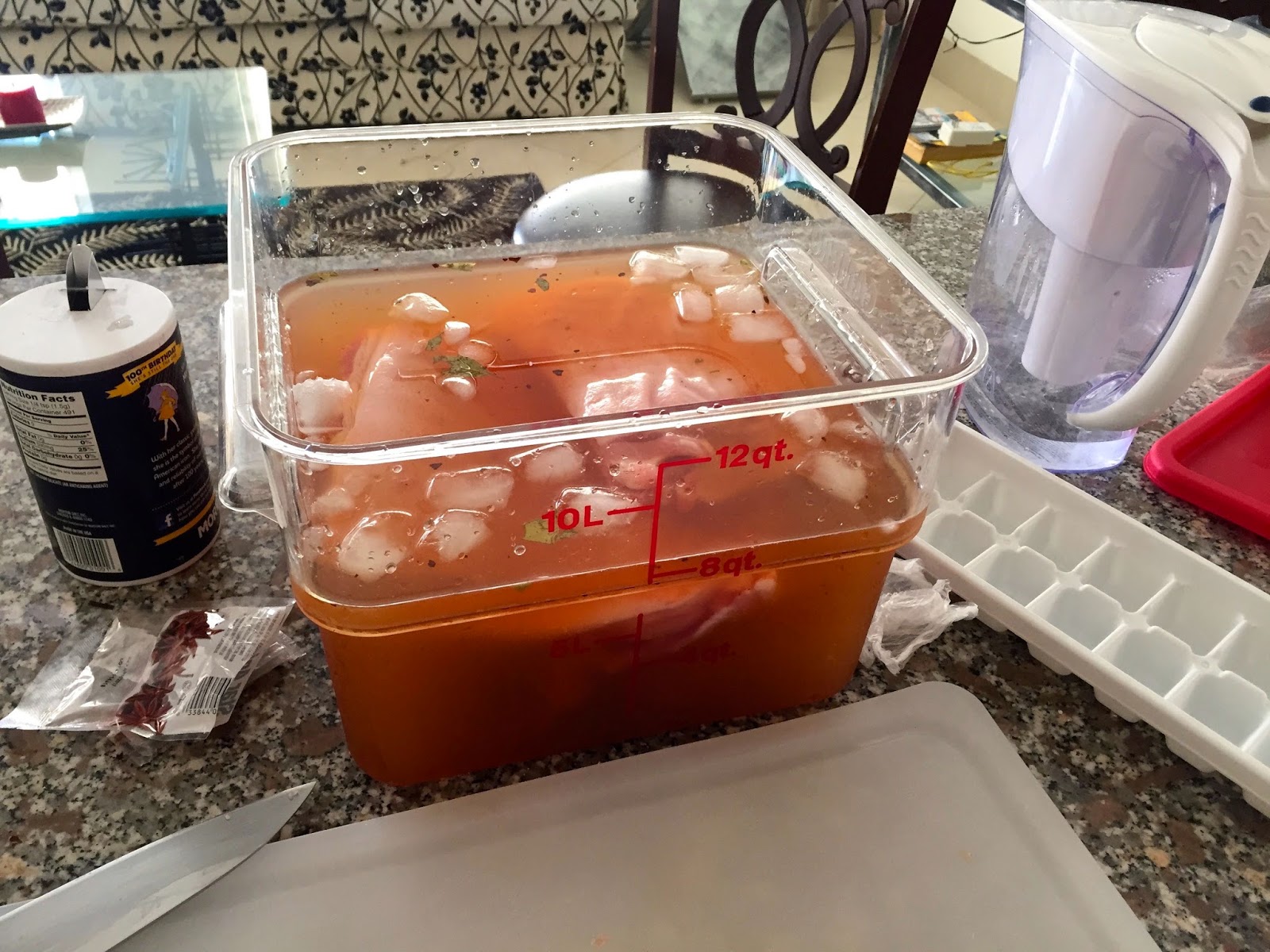
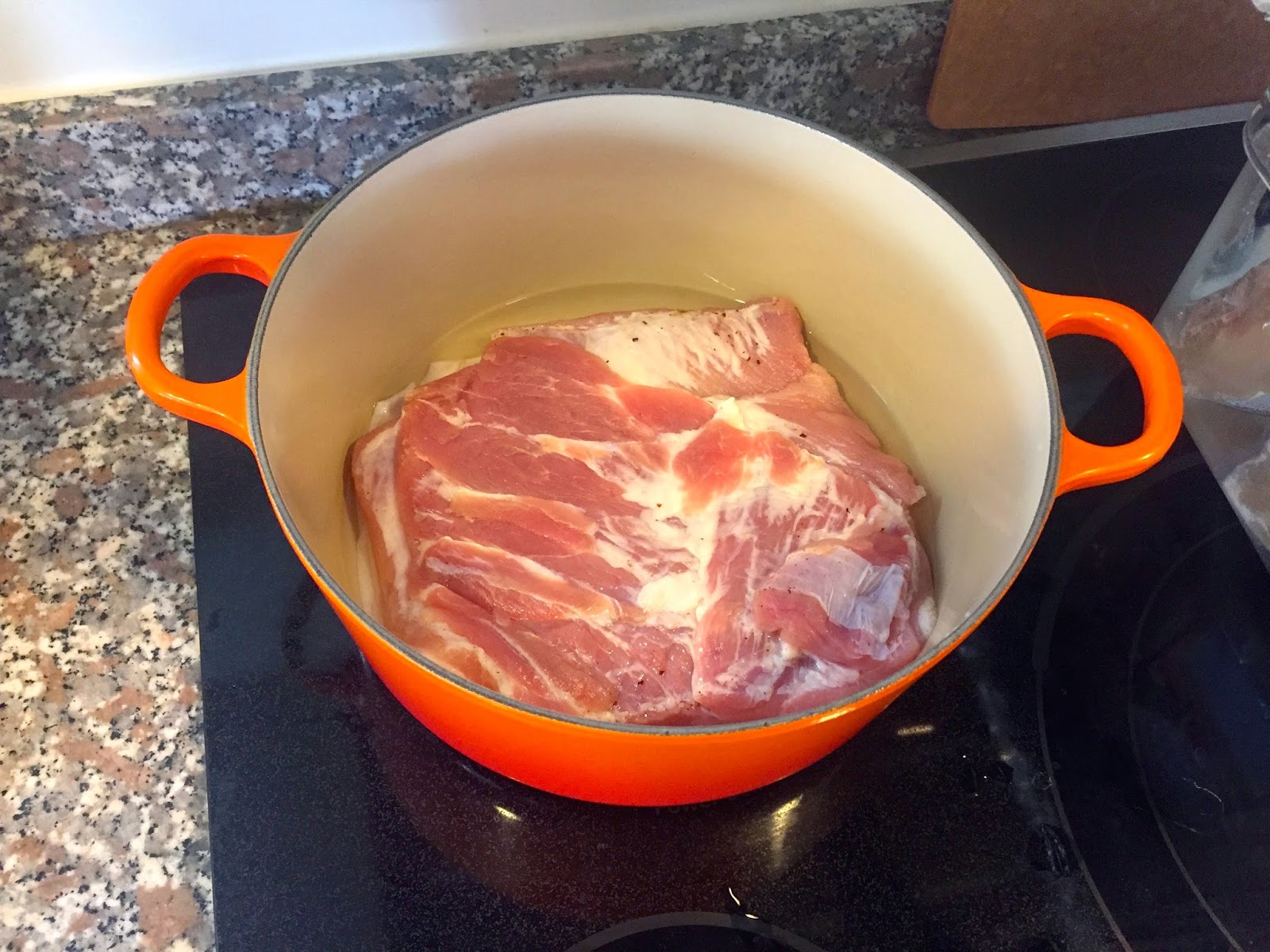
The dissolved brine solution is placed in iced water (in the correct proportions to maintain the five percent salt/water ratio). The pork is left in the brine for 24 hours. After 24 hours, the pork is soaked in water for an hour so the surface of pork is not too intense (last picture is the post-brine rinse). The pork is dried and left to rest in the fridge for another hour so to help the brine spread evenly throughout the meat.

Sous Vide Cooking
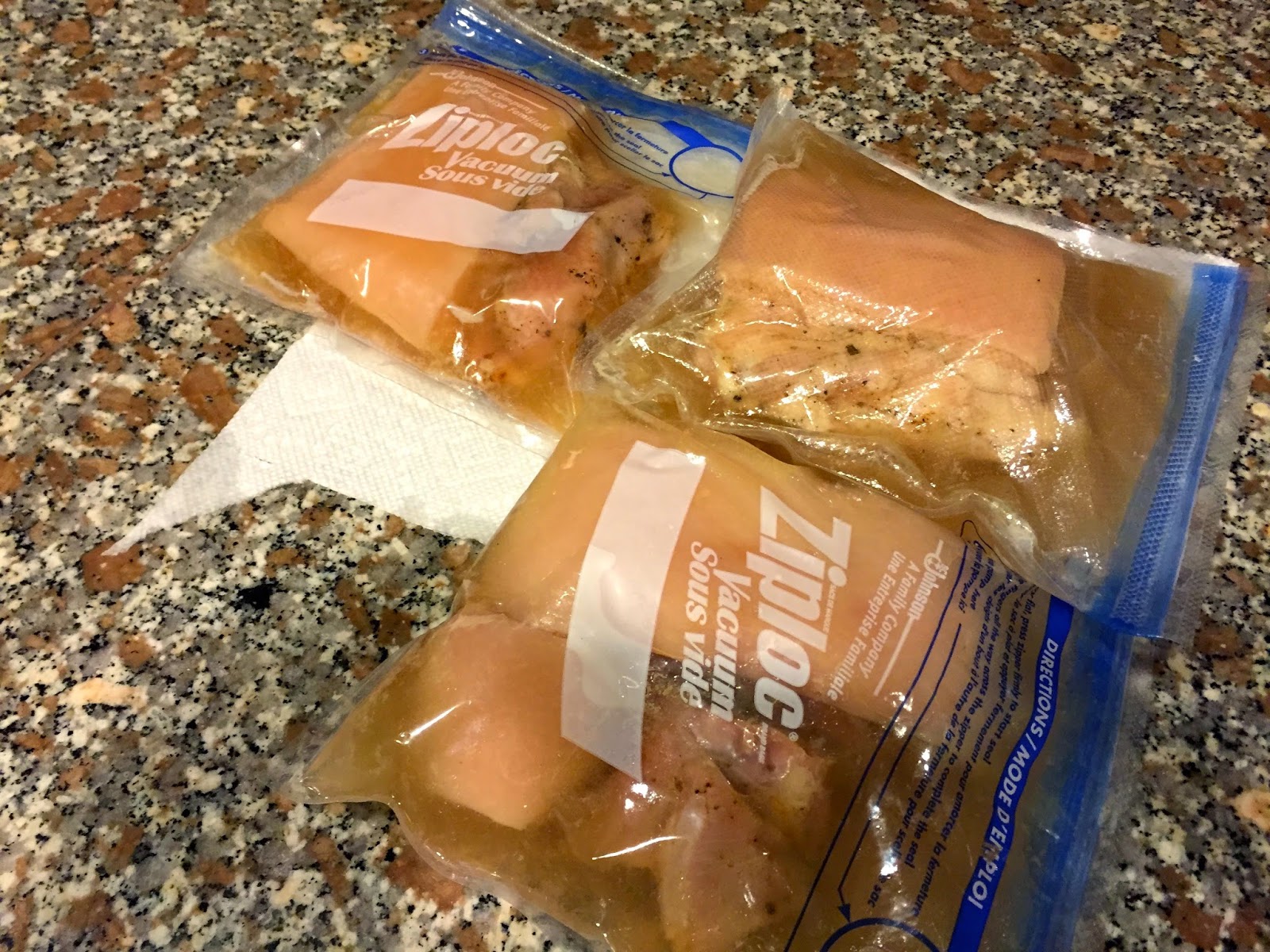
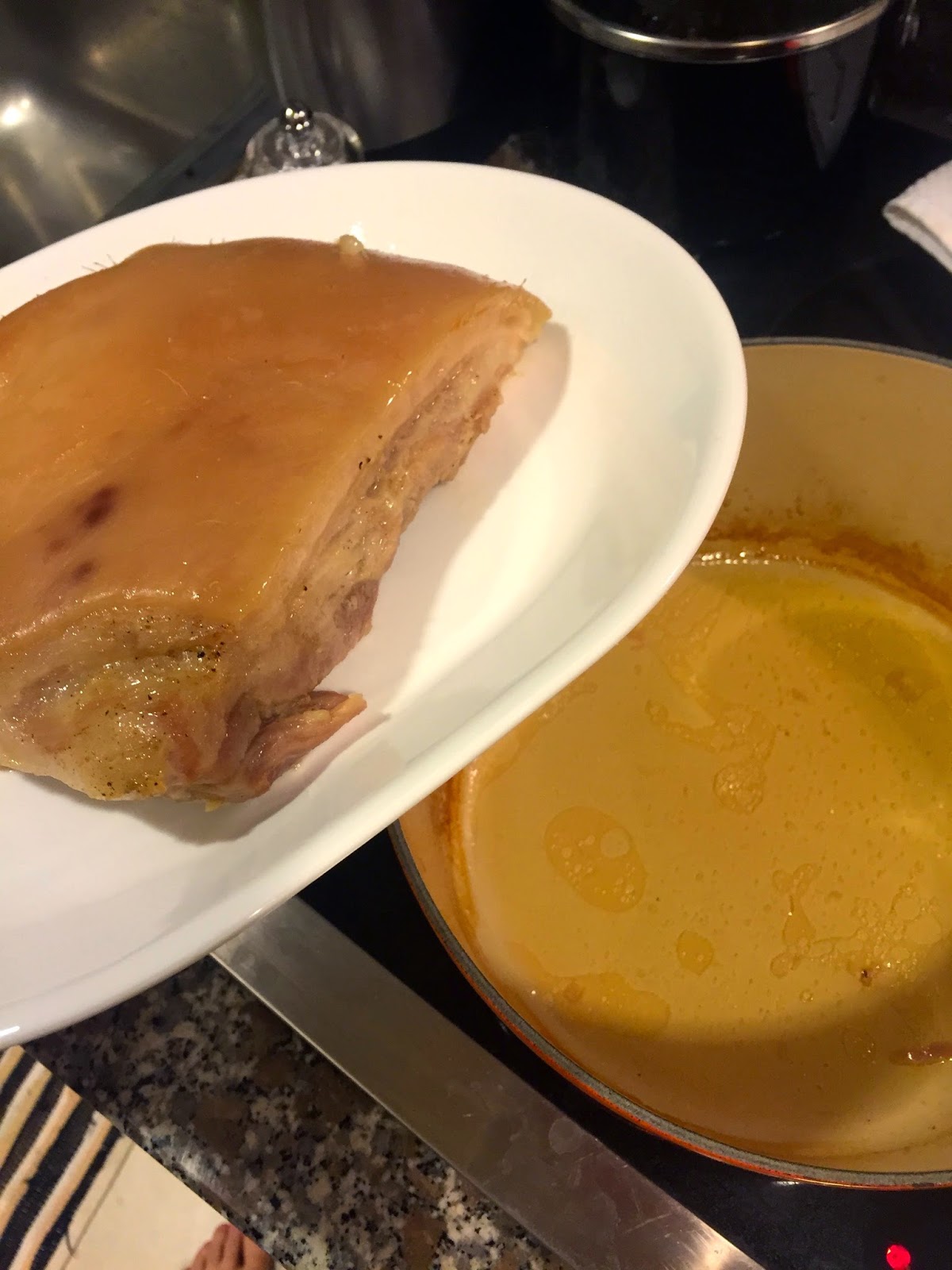
The belly is cut to fit into vacuum sealed zip-loc bags. The bags are immersed into a water bath at 77 degrees celsius for 12 hours and then removed to cool in the fridge overnight (last picture shows pork after removed from the water bath after 12 hours)


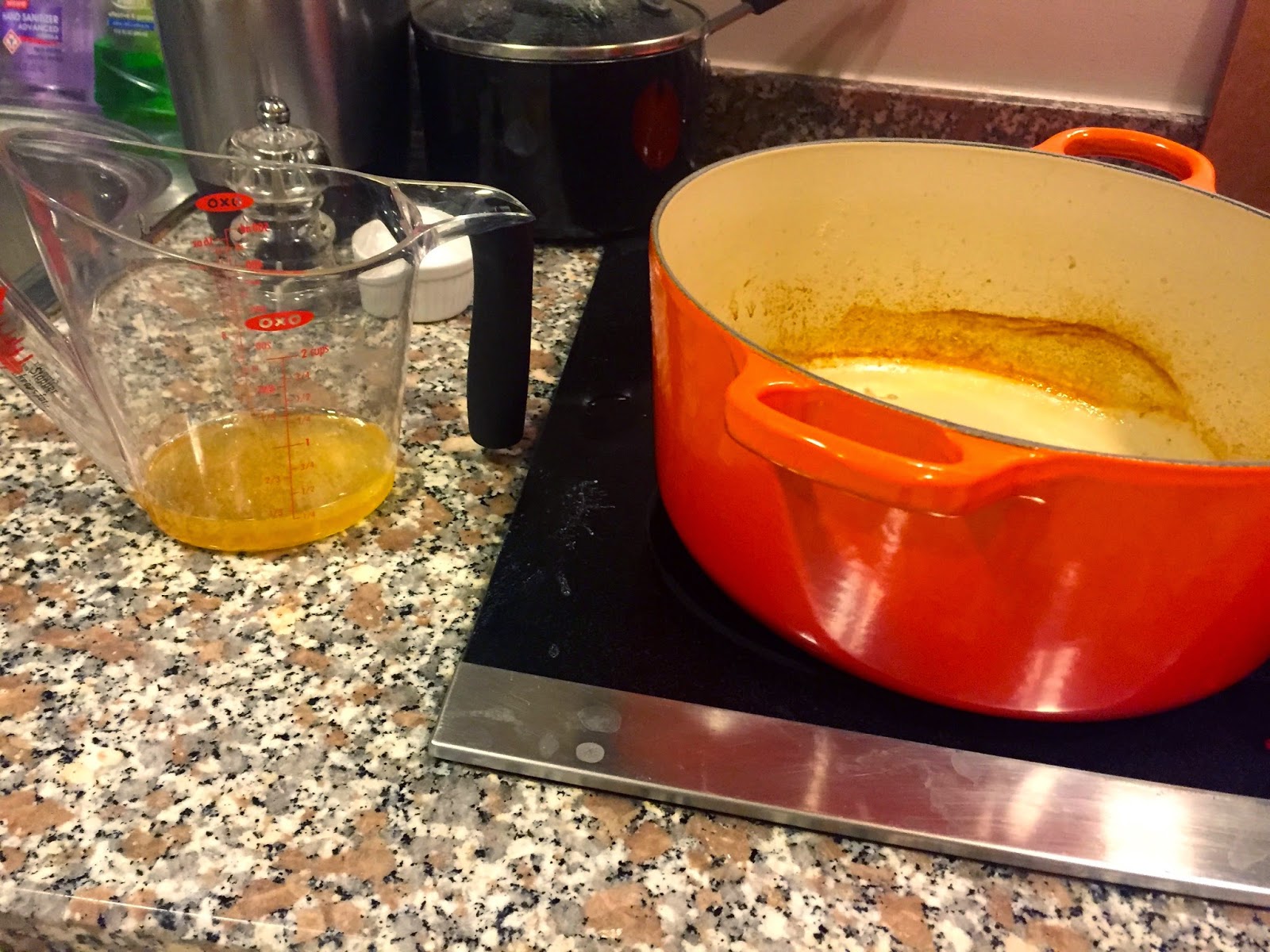
 The cold pork pork is removed from the zip-loc bags, and portioned. The fluid from the bag is completely stiff given the release of gelatin during the 12 hours of cooking. It’s hard to describe how stiff this congealed liquid is. The portioned belly’s skin is scored to help release fat during frying and to help crisp the skin.
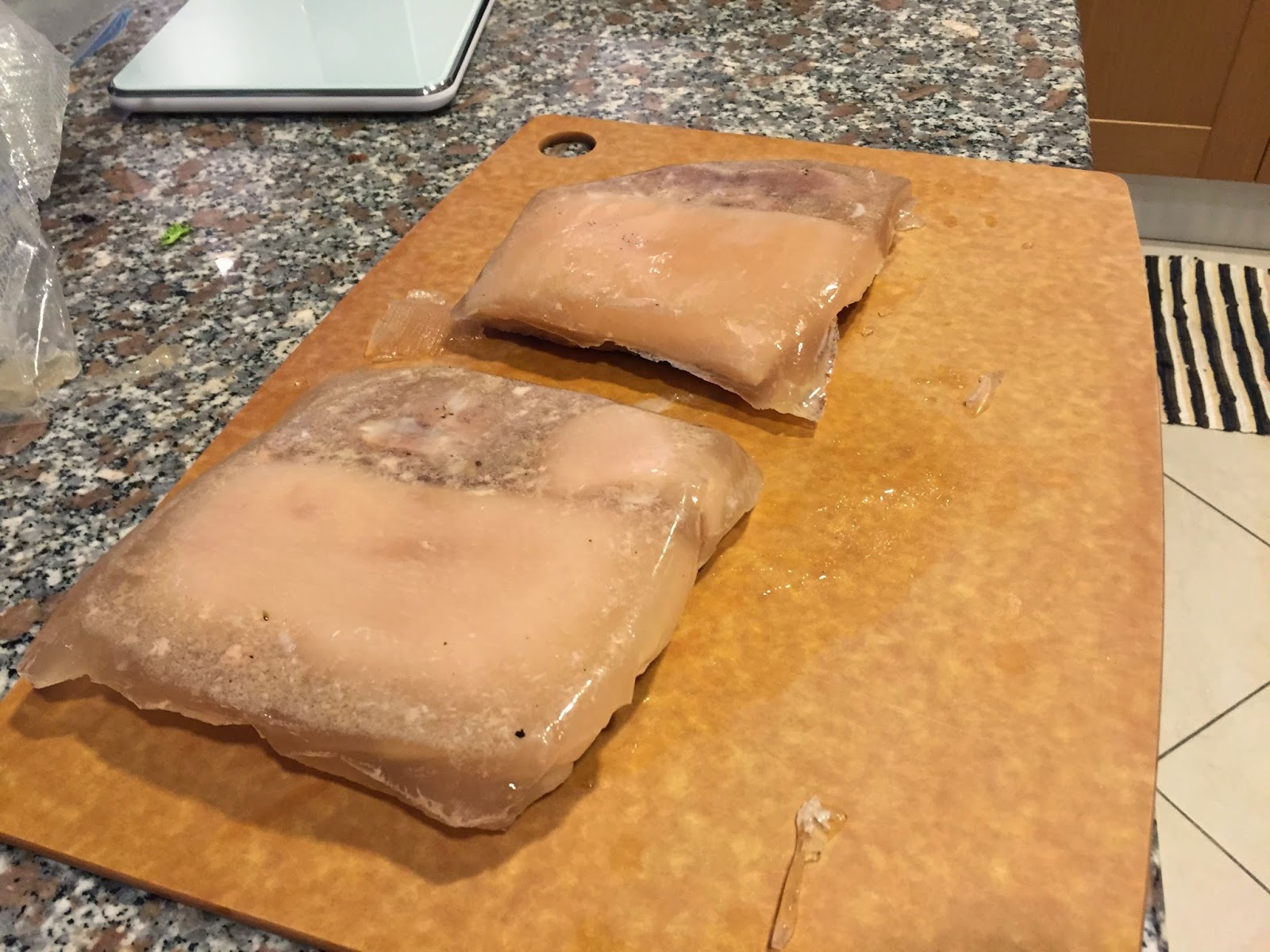
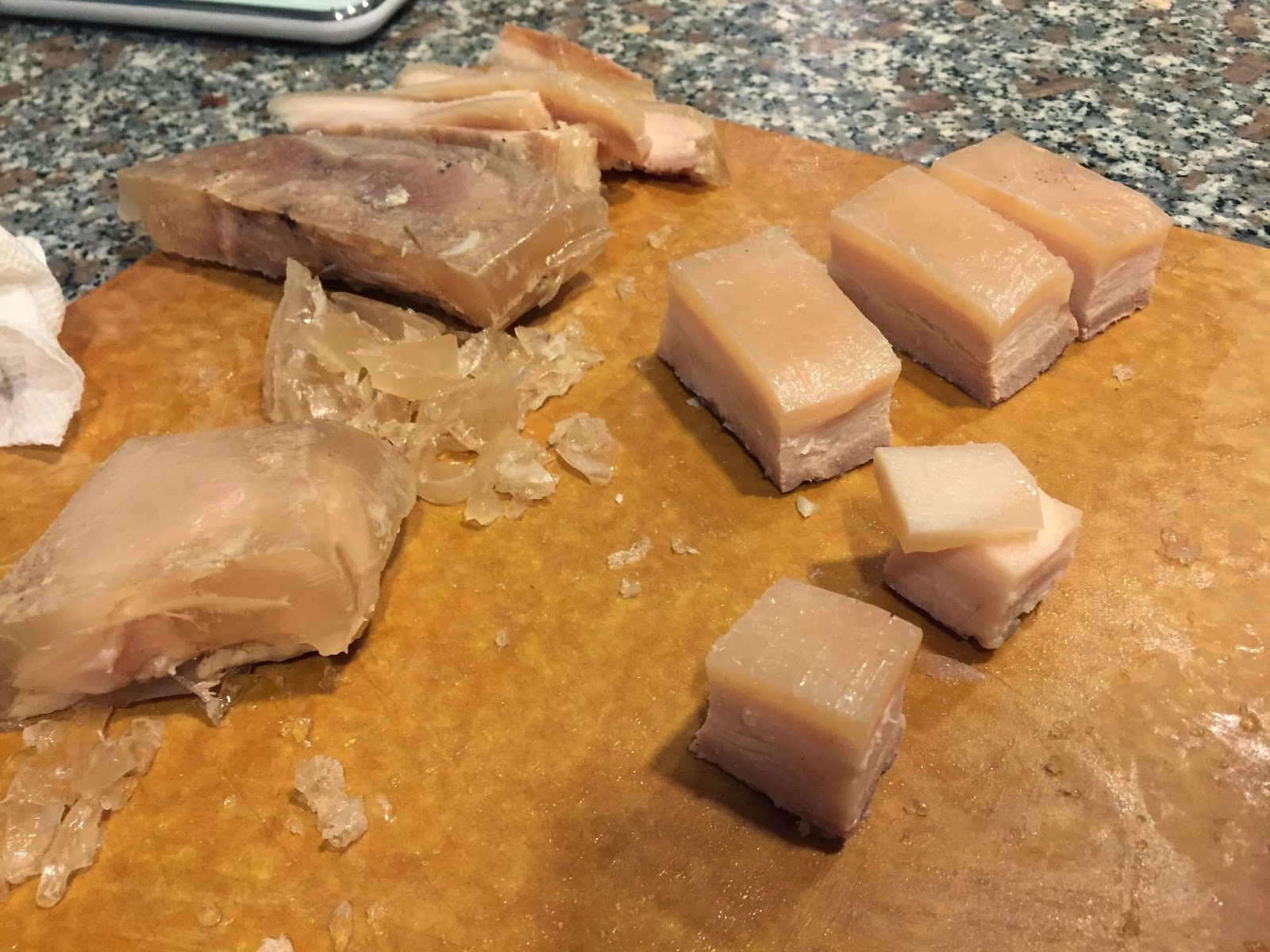


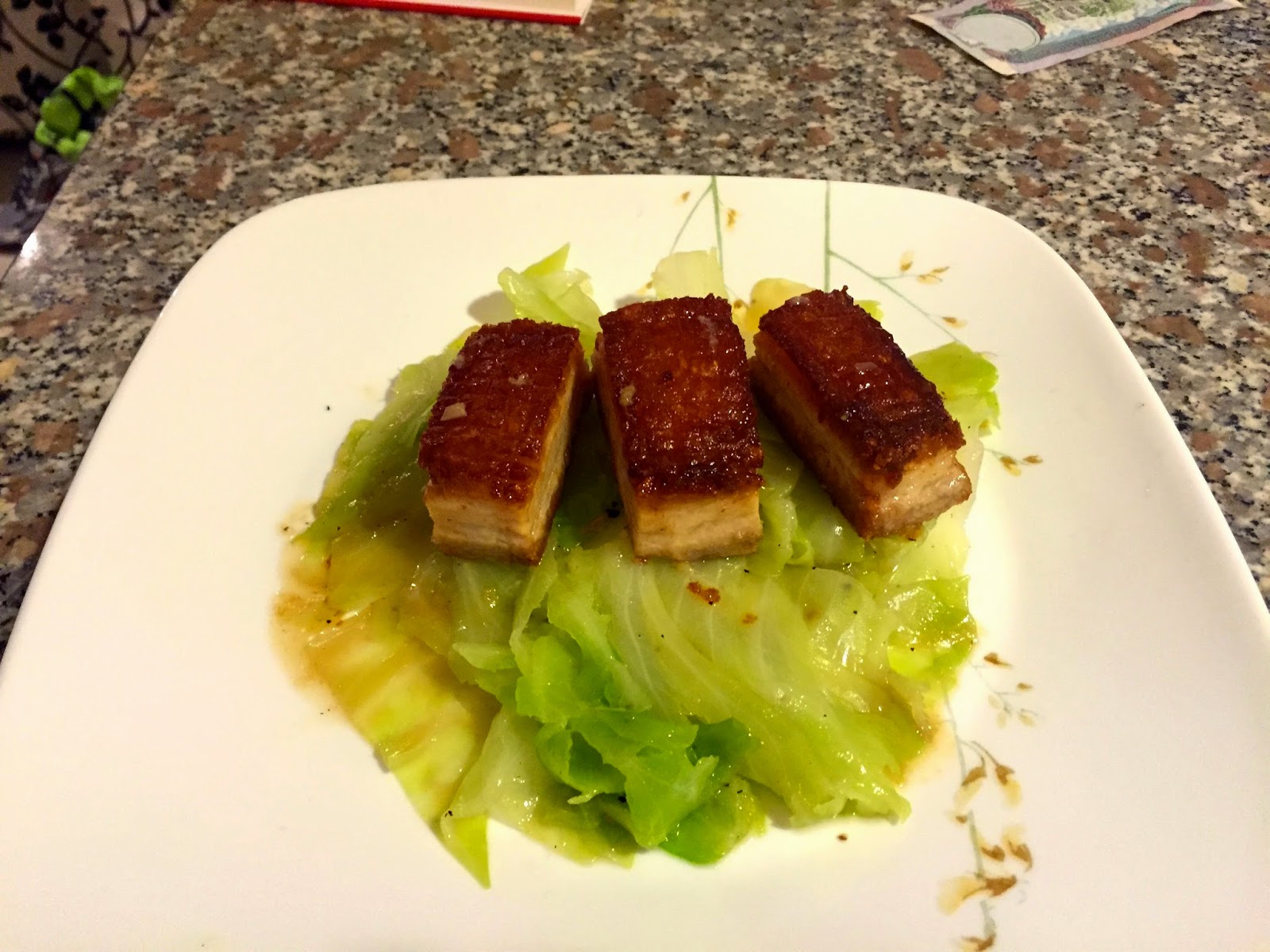


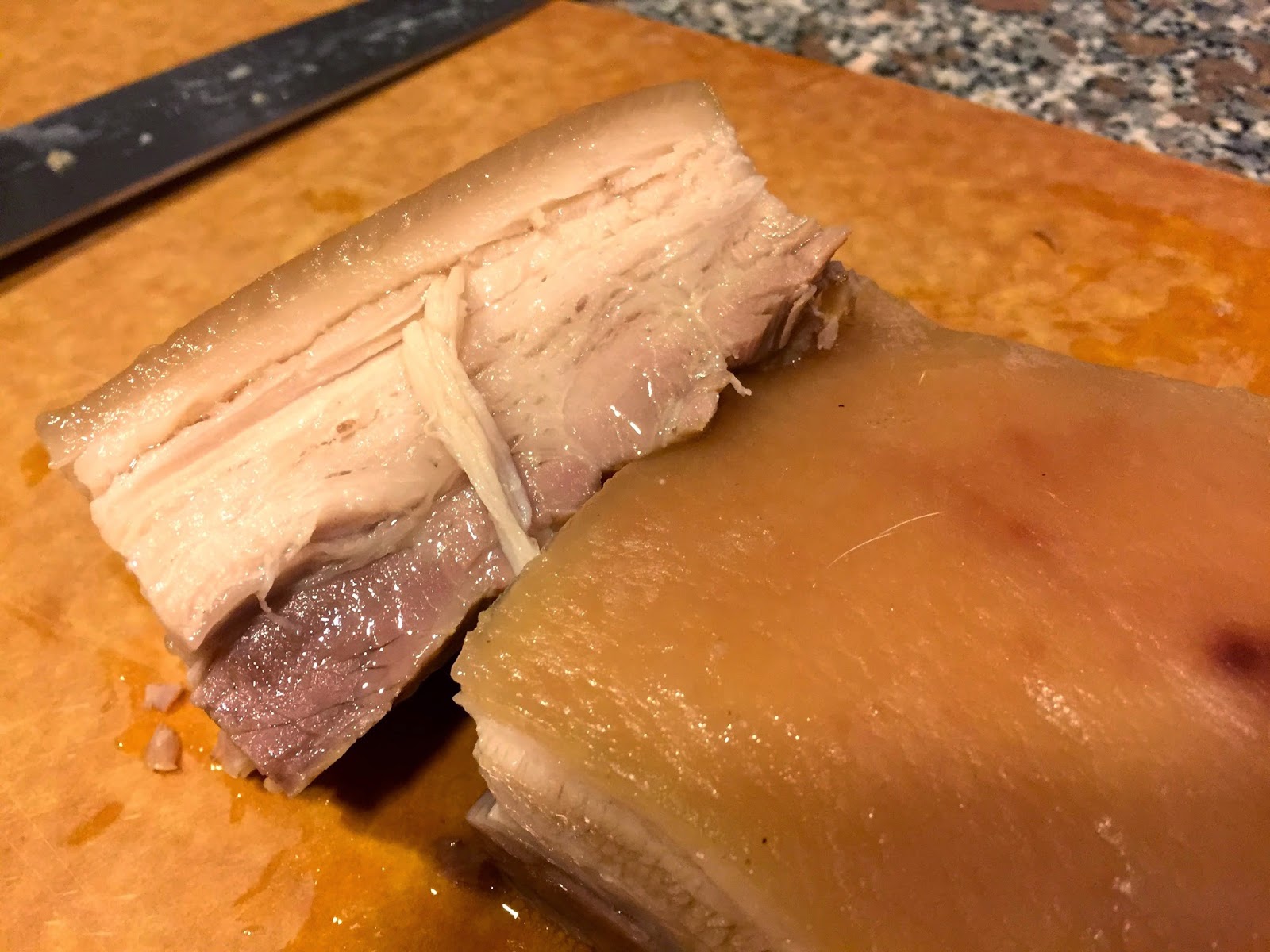

The pork was fairy juicy, and quite tender. The skin has a little tougher than I would have liked. The pork was perfectly salted from the brine, and the flavor (and smell) from the star-anise brine was clearly visible. We still need to go one step further for a comparison to sous vide.
Sous Vide versus Conventional Cooking
The cold pork belly from the two different cooking methods was sliced into equal portions and the skin scored. You could see the difference in the color of the cold cooked pork belly. The pork in the right of the picture below was sous vide cooked, it was pinker. The really big difference was noticed when scoring the skin of the pork, the sous vide pork’s skin scored much easier, even a blunt knfe could have got through it, whereas the oven cooked pork belly’s skin was still very tough. The second picture below shows the sous vide pork belly at the bottom of the picture. The skin looks thicker and and stronger in the top part of the picture. This makes a significant difference for the final fry.
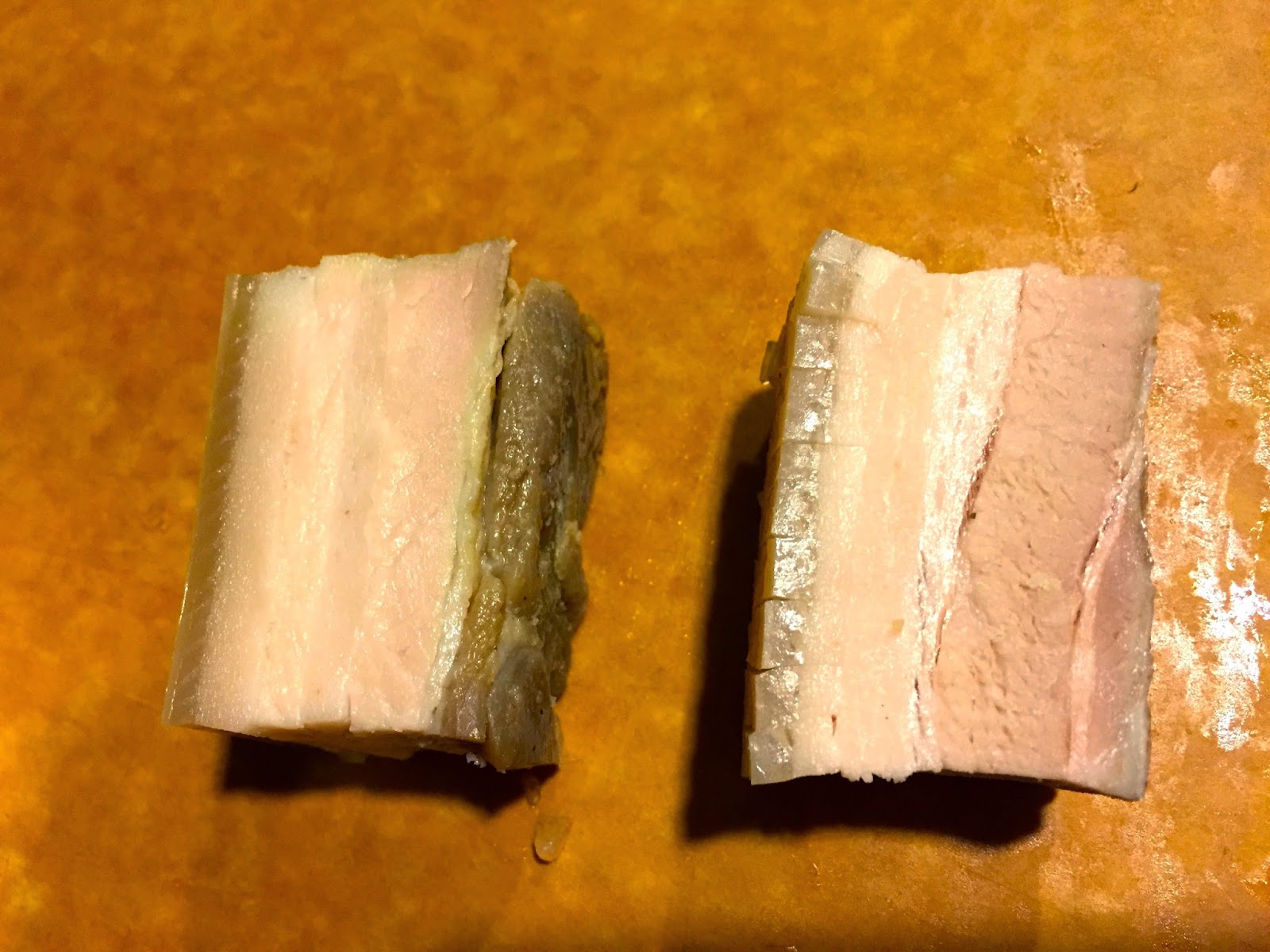

The two portions of pork were seared skin side down in a cast-iron pan and heated through as before. While the pork was similarly juicy, the the texture of the sous vide belly was significantly smoother, the skin was also much more brittle and easier to eat. Given the high fat content of pork belly, it was hard to discern whether the sous vide pork was juicier. They were both fairly juicy.
The sous vide cooked pork delivers a much superior final texture.
Skin cooking methods
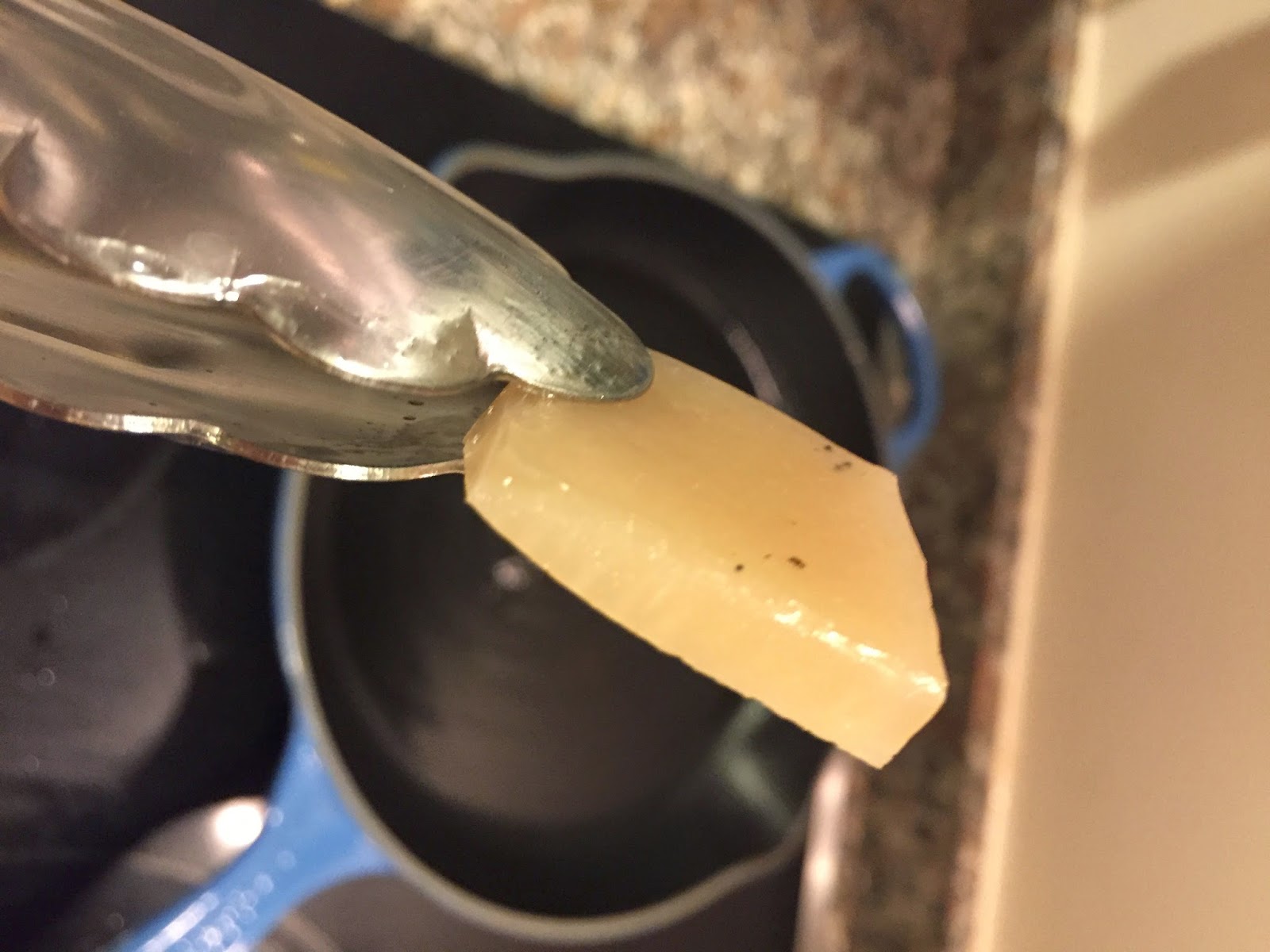
In one method, the skin was removed, and the fat below the skin was cooked face down, and the skin cooked separately. In the second method, the skin was scored and cooked face down. I definitely prefer the skin-on pork. This was done using the sous vide pork, using the conventionally cooked pork, removing the skin would perhaps be a better option as the skin tends to be tougher.


Final verdict
The brining had a significant flavor impact, as there was a subtle star anise flavor infused throughout the pork belly. Sous vide pork belly definitely requires more patience, but the quality of the final product makes it worth it
 EconEats