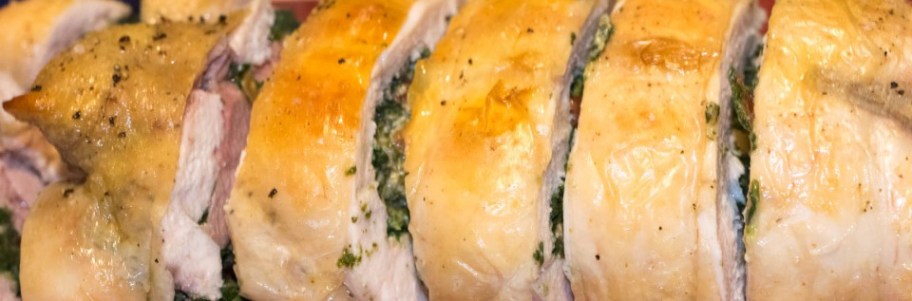
Oxtail ragu leaves bolognese for dead

Biting into perfectly cooked pasta covered in an intensely rich meaty sauce is an experience that is surprisingly rare. Many attempts of spaghetti bolognese fail because poor ingredients are used, or due process is ignored. How do we go about producing a really good meaty sauce (aka ragu)? Do not use mince. I repeat, do not use mince. Minced meat is a collection of abattoir scraps and fat that have usually been over processed in a, perhaps clean, meat grinder. What on earth is the point of grinding down something that will be cooked for many hours anyway? Instead, use oxtail. Oxtail comes from the tail of the cow and is delicious when slow cooked. It also has the added bonus of being incredibly gelatinous making the final dish coat the pasta so much better.

The ingredients are similar to a bolognese sauce, or any slow cooked meat dish for that matter. Note that I add star anise and a few cloves to produce a subtle set of flavors to the final dish. I cover the oxtail in skim milk powder that both helps the meat brown as well as adds another element of flavor. The oxtail is baked in a very hot oven until it browns.

Meanwhile I caramelize onions, as well as brown another lot of onions with carrots and celery until color forms on the bottom of the pot/pan. Deglaze all the pans with white wine and add all the ingredients together. Add water to fill the pot to the top. I also add some chopped pancetta for flavor. Cook on very low heat for 6 hours. Remove the lid after a few hours to encourage evaporation. We want a nice thick sauce left at the end. Add more water during cooking if necessary. After six hours the meat should be falling off the bone.

Allow to cool over night then skim off the fat. Take the meat off the bones and shred. Discard the bones. Recombine the meat and store the sauce until needed.

Reheat the final sauce and season for taste (I add a little extra salt, pepper and red wine vinegar as well as a grating of nutmeg).  Boil the pasta until al dente and to the ready-to-go ragu.

Sprinkle grated Parmigiano-Reggiano and serve. Amazing. The rich flavor of the meat is very apparent.The taste of the herbs as well as the subtle flavor from the star anise present. The boring spaghetti bolognese is dead.
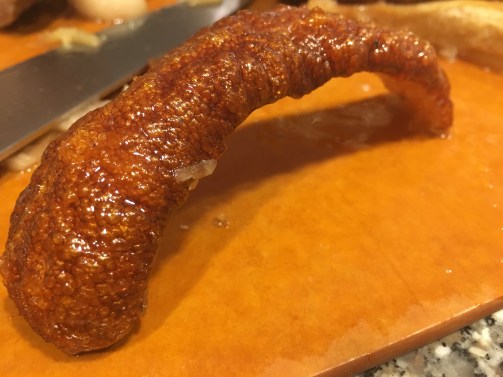
Pork loin with perfect crackling – The final word

After eight attempts I have nailed the pork loin. This was a long trial and error process, mostly as a result of the internet not really having a clue how to cook this beautiful muscle, including some of the world’s best chefs. This is not a quick recipe and requires patience and number of days. The meat of the loin is very lean (despite it being covered in fat) so it overcooks quickly becoming tough and dry, and the crackling requires high temperature to, well, crackle. It is easy to overcook the loin to get the crackling right. The solution is brining, slow cooking, and then a blast of heat at the end.

IMG_3708
Look at those little bubbles

The first step is to purchase the best pork loin you can get your hands on and then prepare a brine.I use a 5/2.5 percent salt/brown sugar brine, with added spices including: bay leaves, peppercorns, star anise, fennel seeds, black cardamon, and juniper berries. The brine is boiled in water to dissolve the sugar/salt as well as to help bring out the flavors of the spices. The brine is brought down to fridge temperature with ice (5 degrees c). To help the brine permeate the meat, it is injected throughout the loin and then placed in the brine for 24 hours (or longer if you wish). Pork loin is very dense and it takes a very long time for the brine to distribute throughout the muscle.

After 24 hours, the loin is removed from the brine, tied so that it is an even shape, then scored to help the crackling later. The loin is placed uncovered in the fridge for 48 hours to dry the skin. After 48 hours the loin is removed from the fridge at least an hour and half before putting into a 140 degree c oven. It is then cooked until the internal temperature reaches around 55 degrees. The internal temperature will rise to around 63 degrees c after resting. It took around 1 hour and 50 minutes with this loin to reach 55 degrees (the starting temp was 10 degrees) and the near-outside of the loin reached equilibrium temperature with the inside after 40 minutes.

The oven is then turned up to 260 degrees c and the loin is blasted for around 15 minutes.  This allows the crackling to form without overcooking the inside. While the loin rests for a final time the gravy is prepared by pouring off the fat from the roasting pan and then adding some Cider to deglaze. Once the roasting tray is deglazed I strain into a smaller pan and reduce until the desired flavor is reached. The loin is unbelievably moist inside, while the crackling is perfect.

I serve the loin with its jus, and braised red cabbage  which is very acidic, complementing the loin, and left over cider to drink

All in all, this is quite a complicated piece of meat to nail but definitely worth it.

There were many failures along the way prior to this which include:

  • Insufficient brining time
  • Insufficient skin drying time (i.e. no crackling)
  • overcooking the inside in order to get good crackling
  • Using the overhead grill (i.e. radiant heat), which technically produces better crackling, but also is a pain not to burn the crackling
  • Not scoring the skin in nice 1-2 cm vertical lines. I really do not care to understand the science behind crackling, but I figure it is related to the water vapor exploding in/under the skin which can’t happen unless there is enough heat under the skin. The scoring in deep, vertical patterns allows the heat in.
  • Rubbing the skin with salt/vinegar/oil is BS. I have concluded the only thing that matters is dry skin, with score lines.

Things which only help the overall product:

  • Longer brining
  • Injecting the brine into the muscle
  • Longer drying
  • Lower temperature cooking
  • Higher temperature end blasting