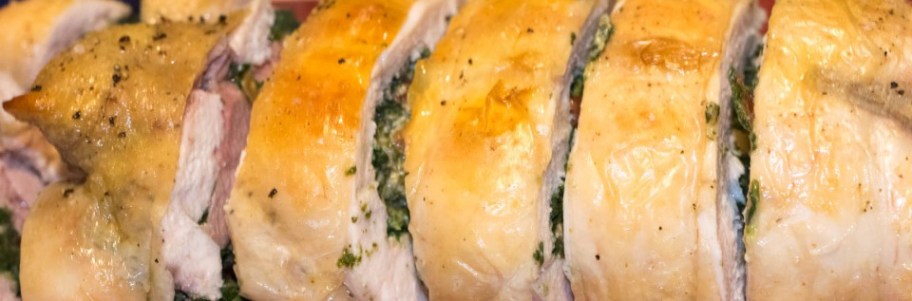
Ballotine of Chicken

In the effort  to support the local economy I attempted to cook a recipe with ingredients sourced domestically. This is exceedingly difficult in a small island economy. The ballotine of chicken is a deboned chicken that is stuffed with some kind of substance, rolled up, and roasted. It took me a fair bit of time to put together, but with practice that time could be reduced significantly

An economics side: While chicken is produced domestically, you may be surprised to know that most of that chicken is imported. From the baby chickens, to the antibiotics, to the chicken feed, and to the chicken wire.
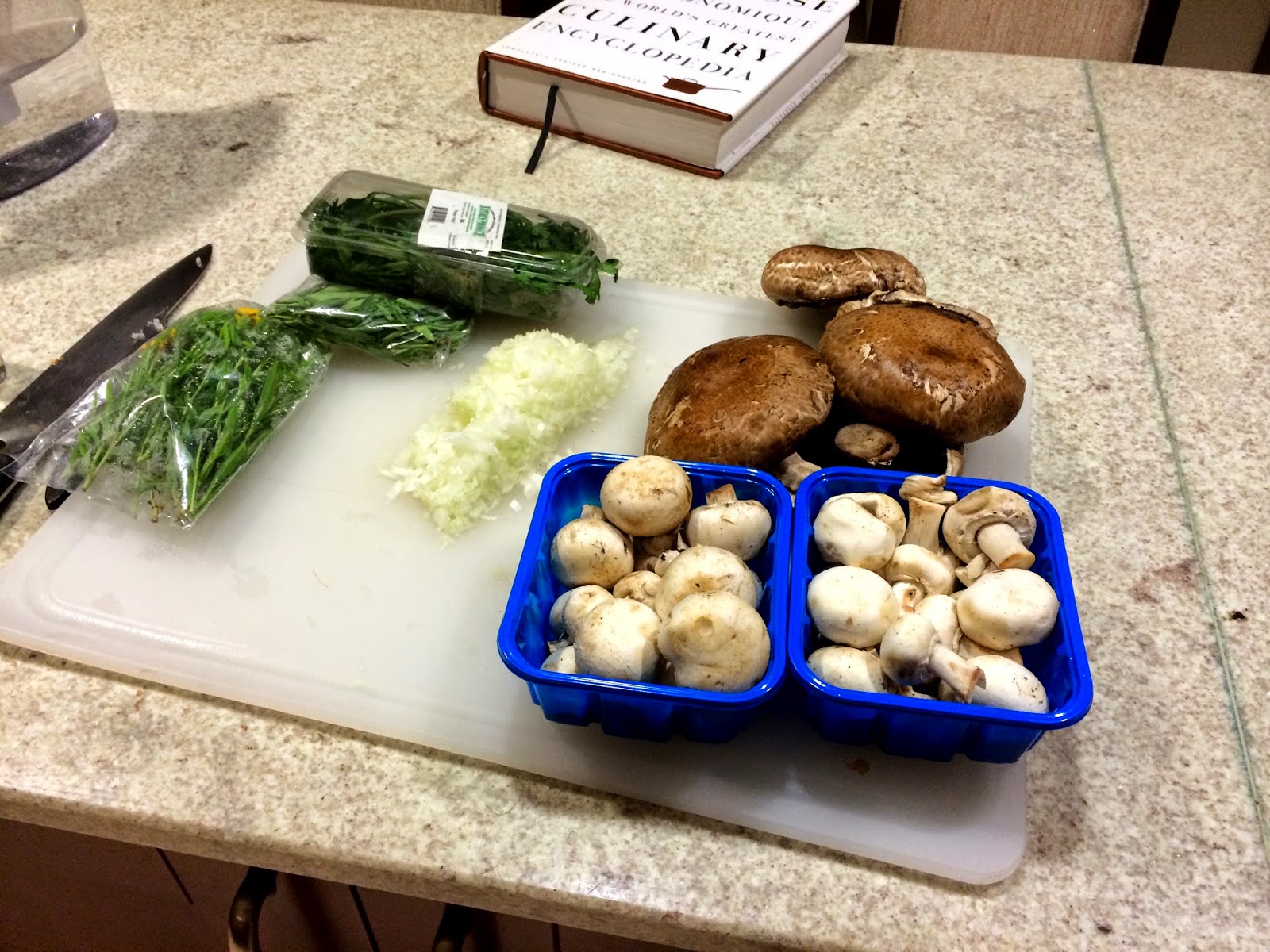
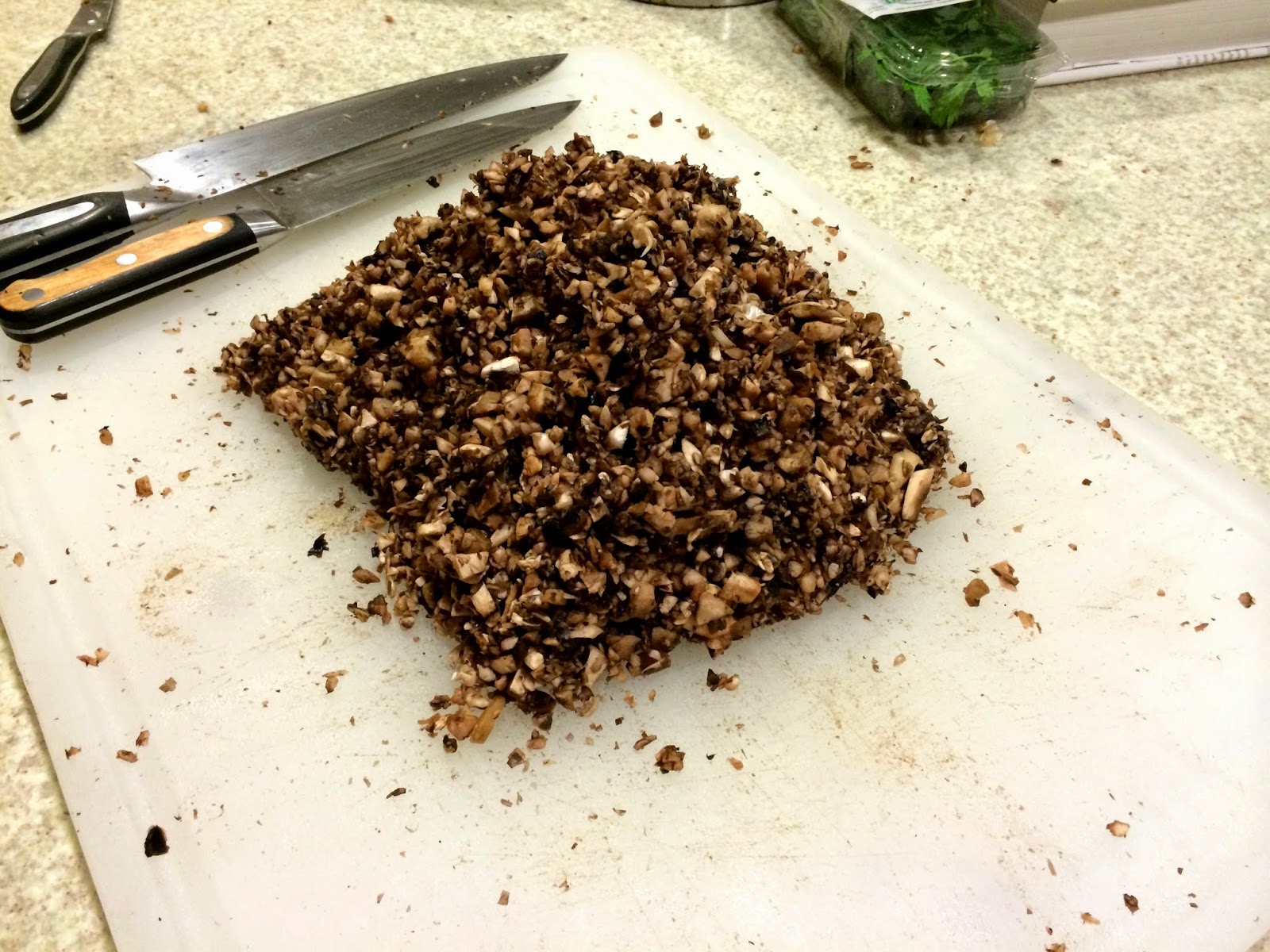
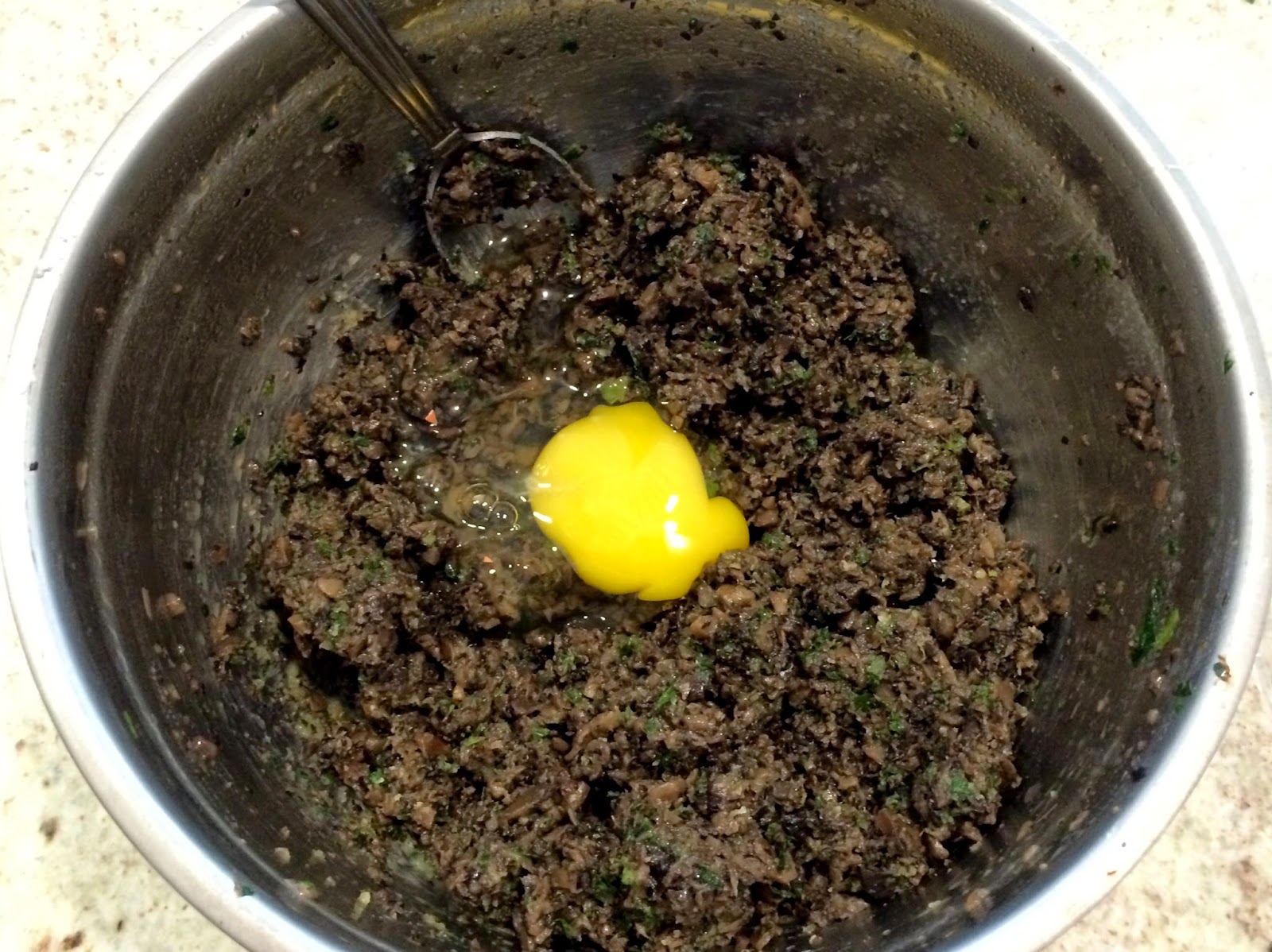
I decided on a mushroom duxelle stuffing, seasoned with tarragon and parsley. Essentially you chop mushrooms beyond recognition and simmer them in shallots and butter until all water has evaporated. I add an egg to keep it all together when carving.

Now the fun part – Deboning the chicken. I’m not going to describe this process, but I encourage everyone to watch the YouTube clip of Pepin deboning a chicken. It will change your life (perhaps not).
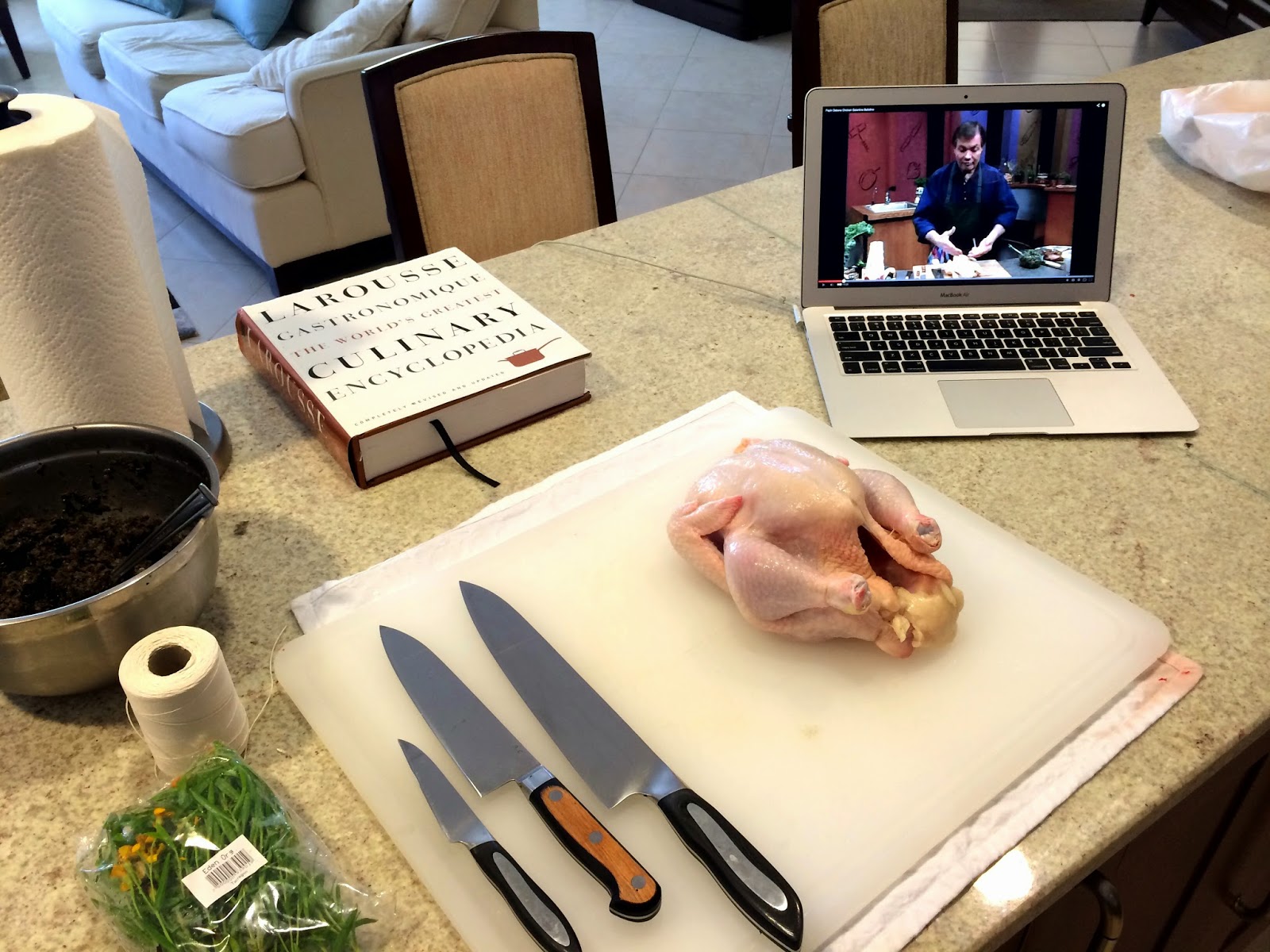
Now play taxidermist: Place the stuffing evenly on the chicken and make it look like a chicken once more, and neatly truss the stuffed bird.

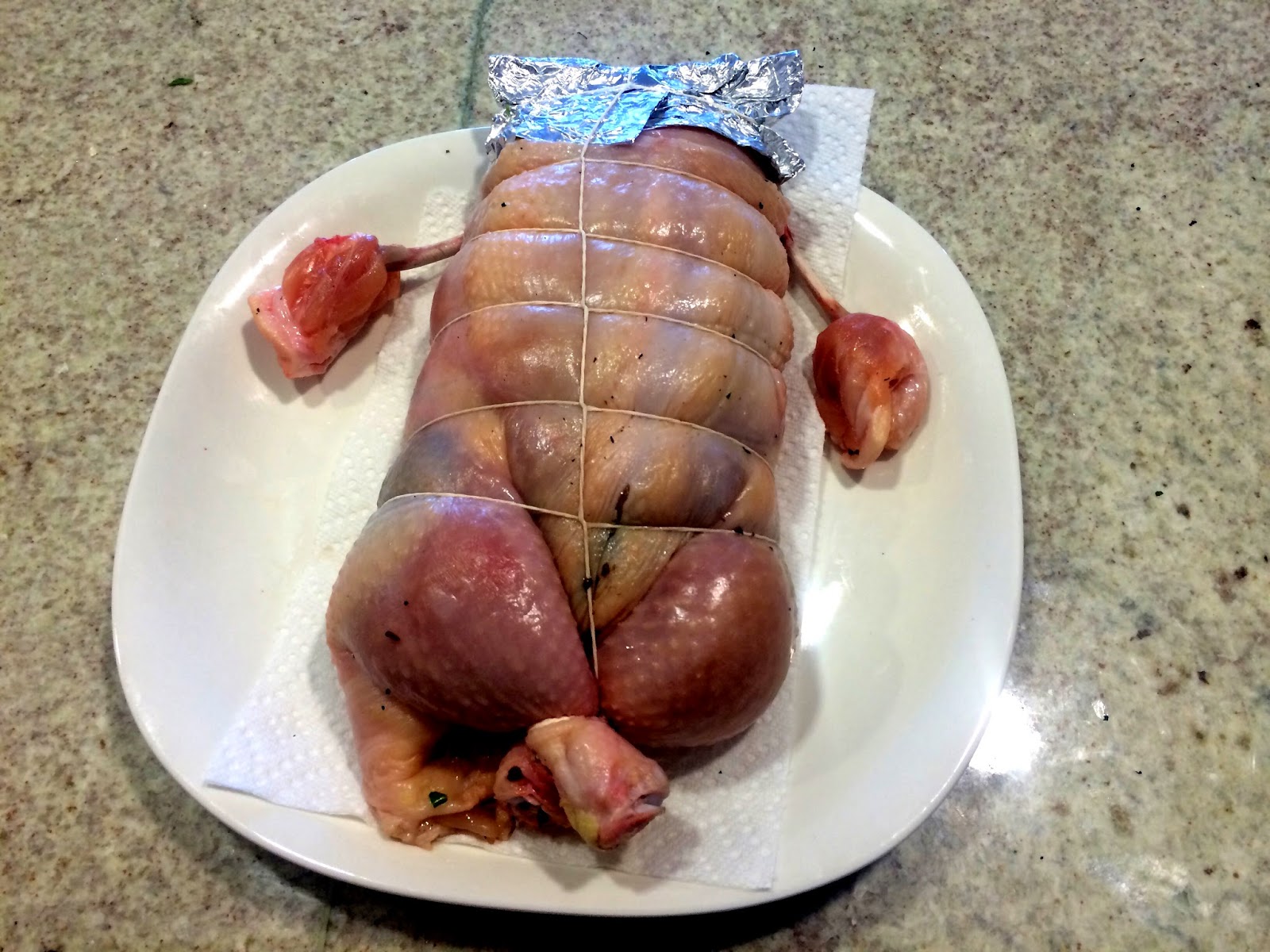
Roast at 400 until the internal temperature reaches around 145 (it will continue to rise another 10 degrees. Look at that juiciness.  Damn.

Make a sauce with the pan drippings and plate. I included chopped deseeded tomatoes marinated in olive oil and tarragon, and baby asparagus as sides.

The ultimate home-technique for cooking steak.

This method uses a mixture of traditional searing, with Sous-vide cooking (cooking food in vacuum sealed bags in a water bath)

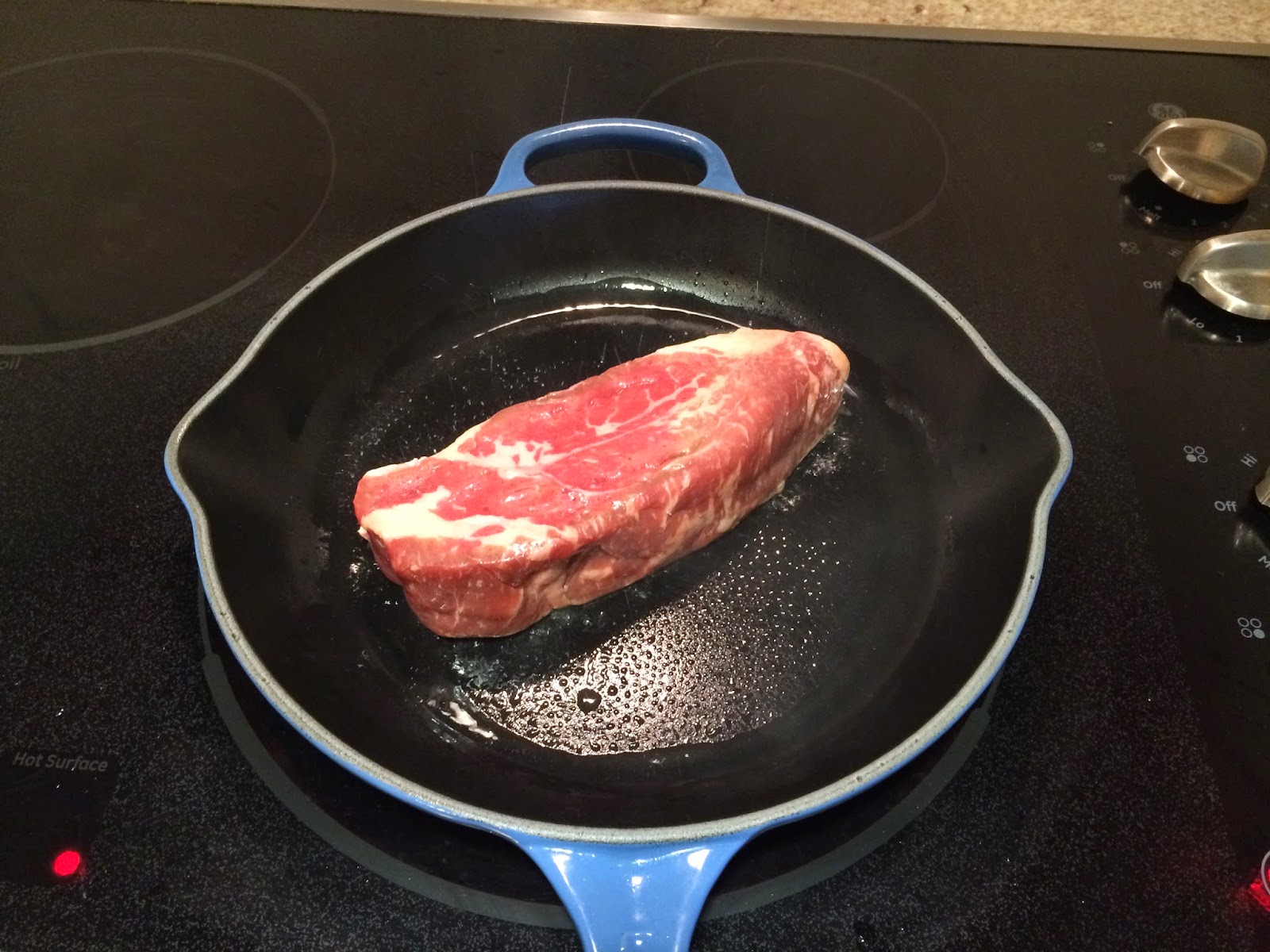
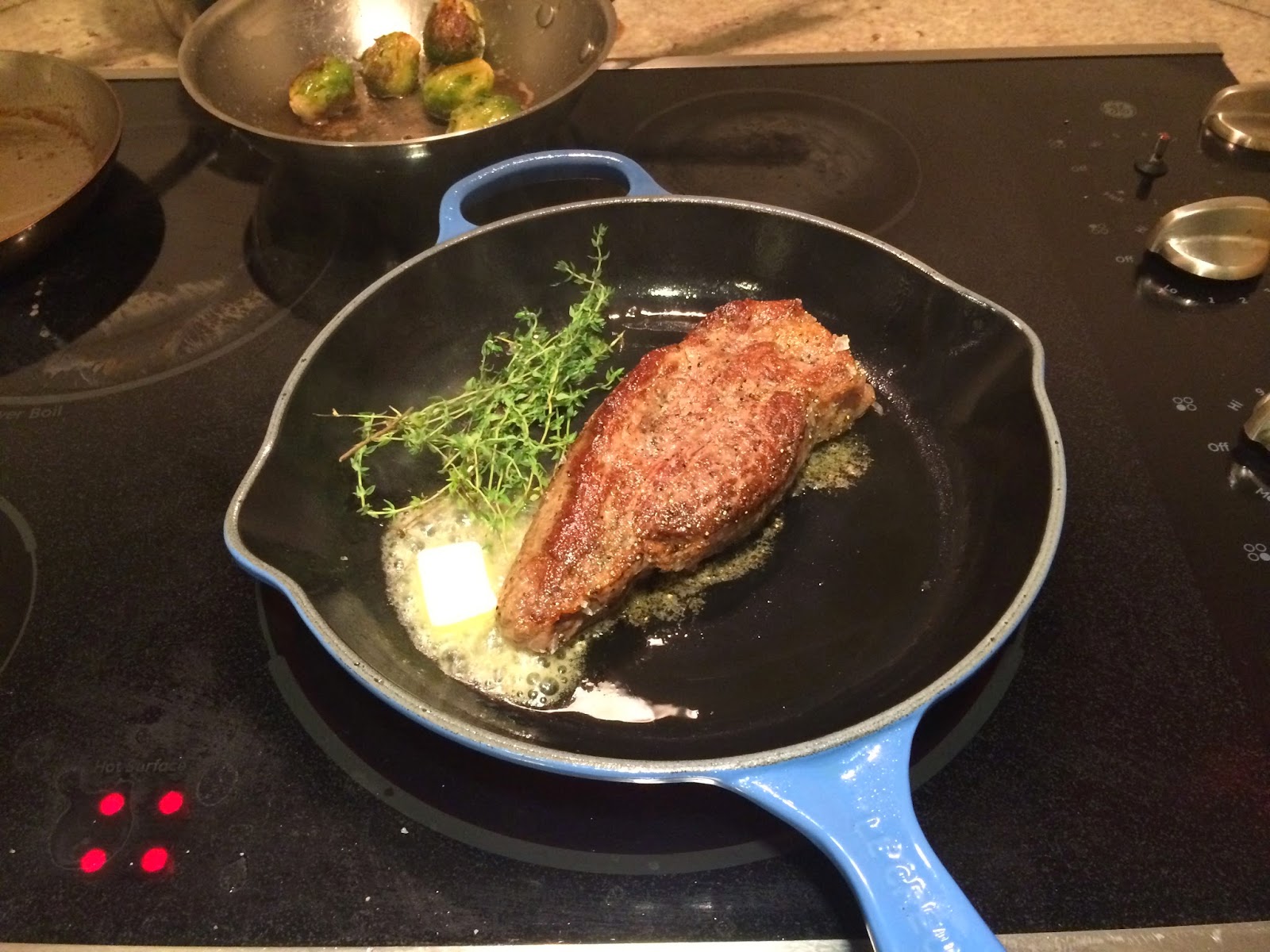
1.  The first and most crucial step is to get a good piece of meat. In this instance, I needed to beg the only importer of unfrozen angus beef on the island that I reside to cut a rather large slab of beef. The meat must be pre-seared before going into the water bath.  The steak should be cold so it does not cook past the surface. (You shall see later). It is best to use a very good cast-iron pan. The pan here is from Le Crueset, and is brand new that was snuck into my suit-case during my last visit to civilization

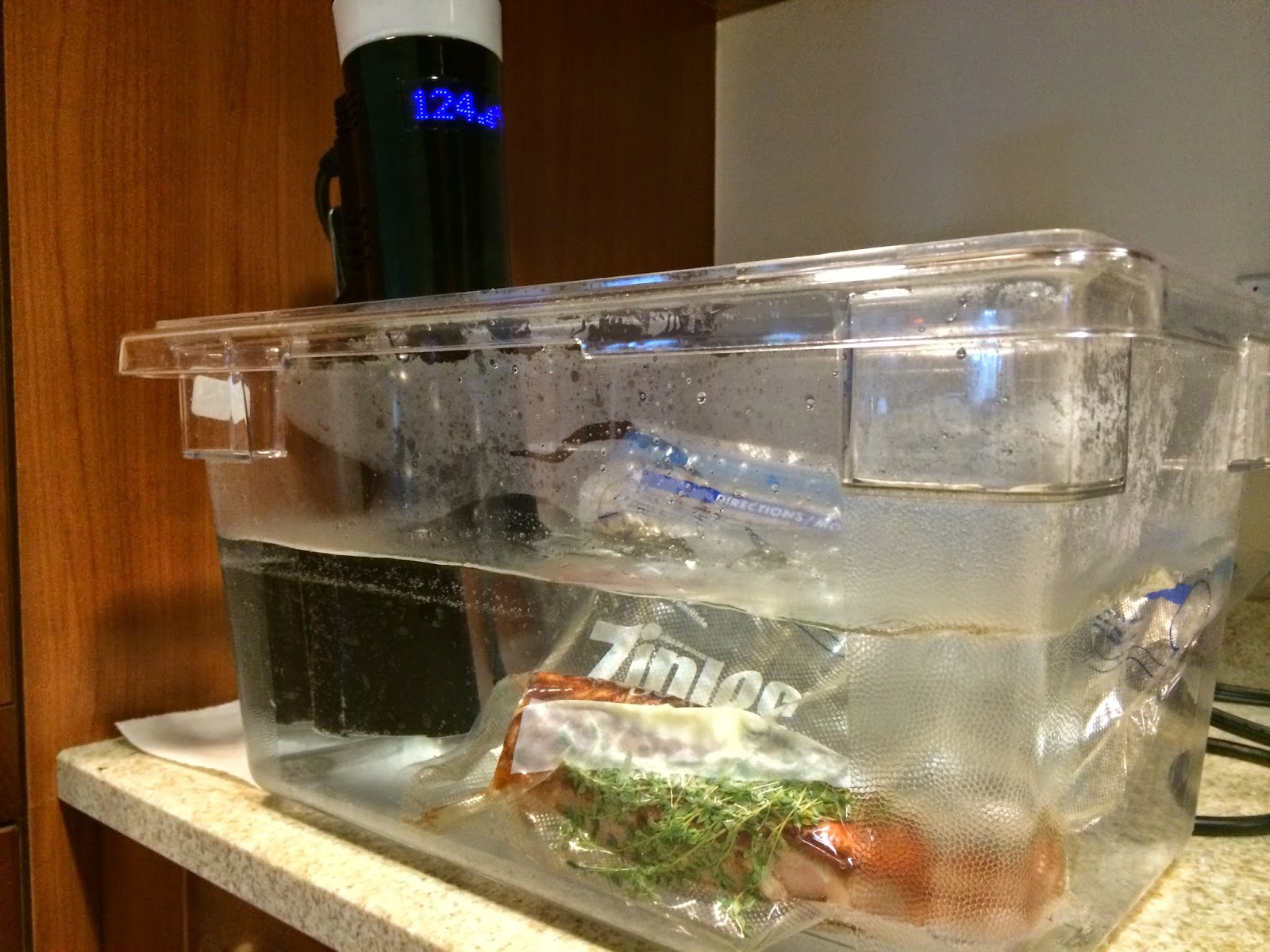
2. Place the slab of beef into a ziploc bag with thyme and butter. The snotty-nose nerdy food blogs seem not to think that the herbs and butter make a difference in the vacuum bag, but why not add more flavor?

3. Place the steak into a water bath at a constant temperature of 54.5 degrees Celsius (131 in the american measurement) for a few hours. At this thickness it should probably be in the water for around two hours. I’m using an immersion circulator that I again stuck in my suitcase at one of my previous visits to civilization. This little device essentially circulates the water and keeps it at constant temperature.

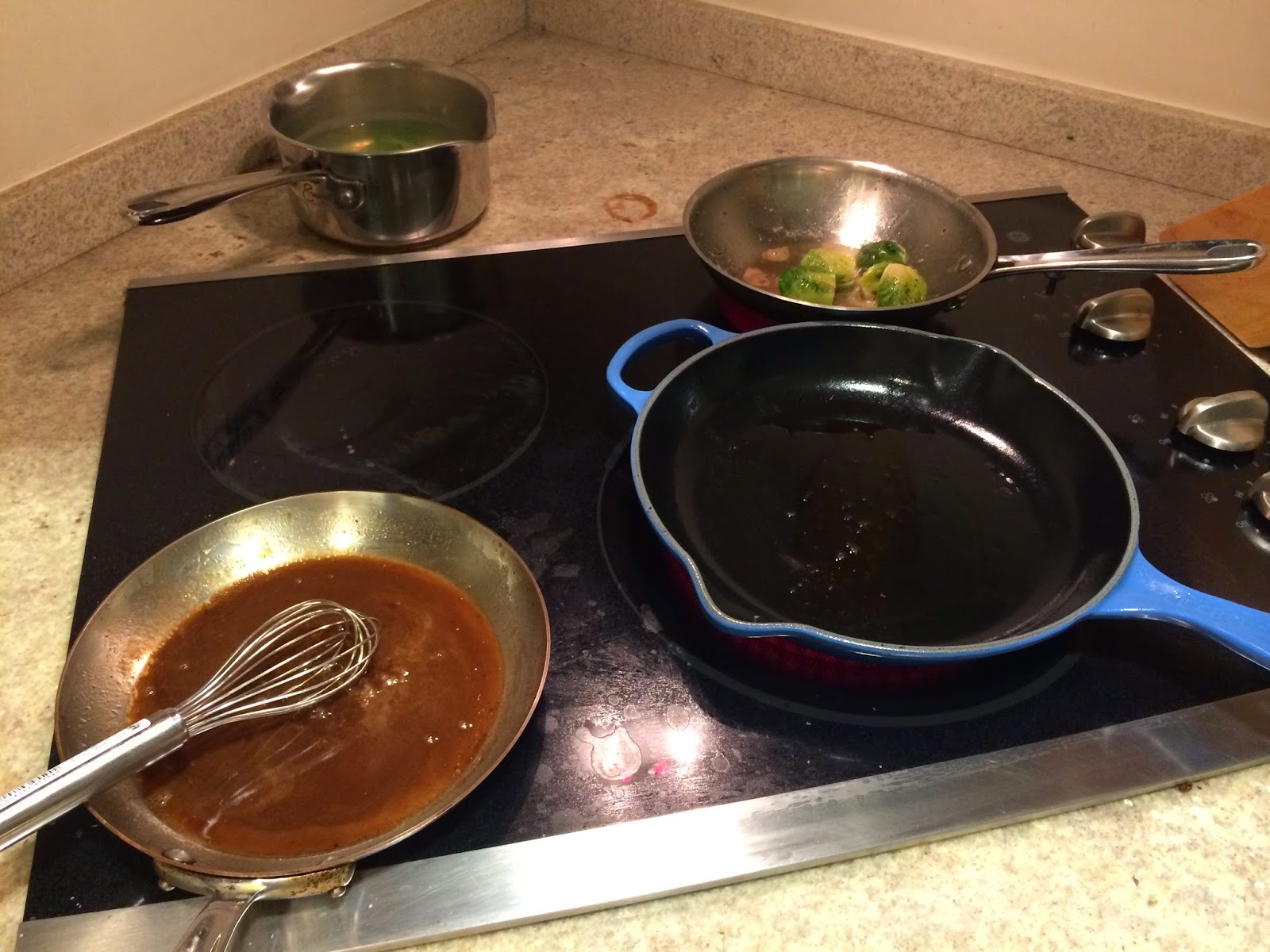
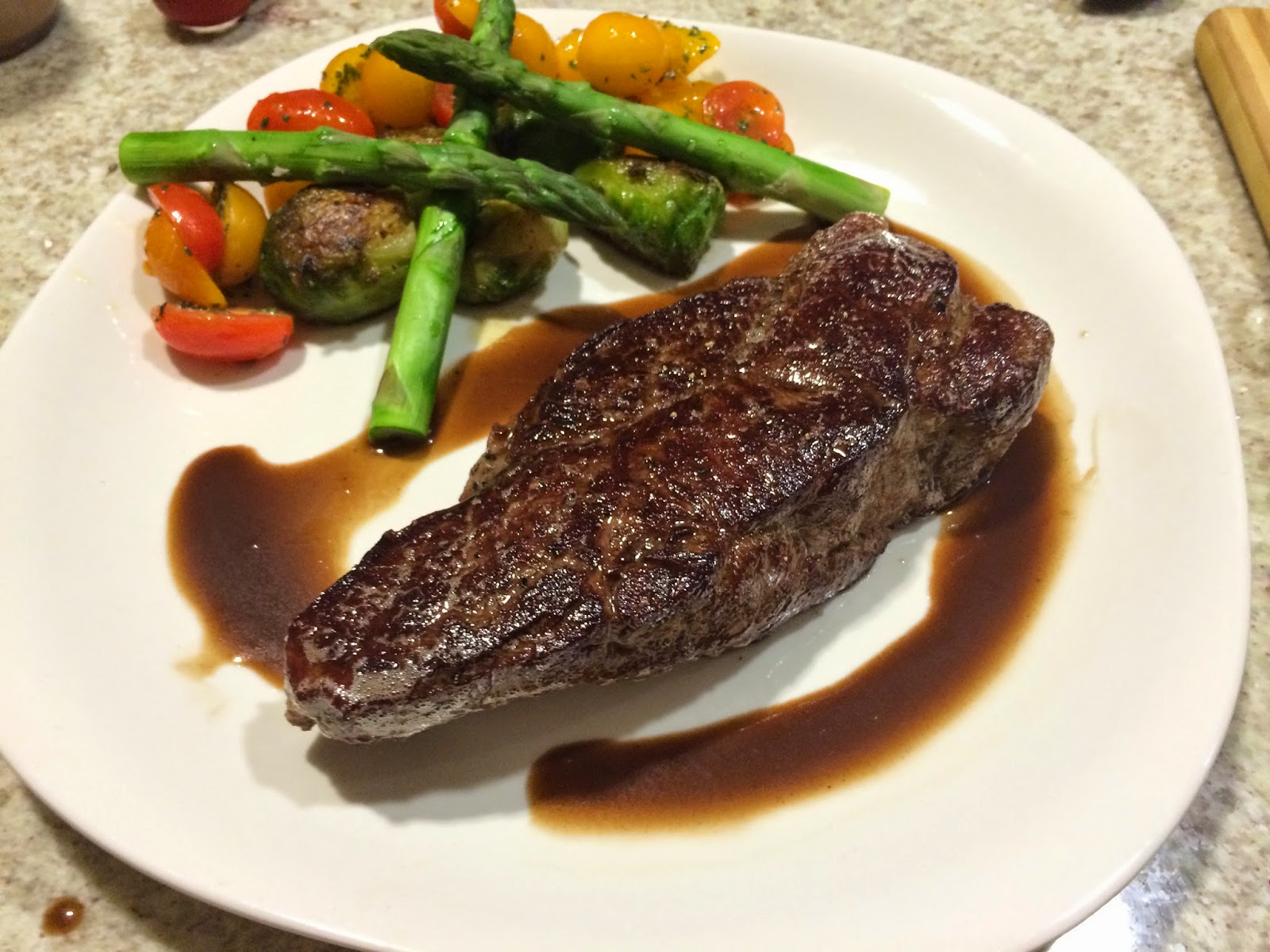
4. Remove the steak from the vacuum bag and pat dry with a paper towel and then cover with salt and pepper (Maldon salt is best!). Sear again, this final sear we baste with butter infused thyme! Also prepare your sauce bordelaise (red-wine sauce prepared previously and stored in freezer).

5. Plate with sauce and a few greens that will remind your stomach that you are no longer a meat-eating savage.  See that color. Red all the way through with an excellent crust on the outside, the crust thanks to the cast-iron skillet. Unbelievable

Economist Methodology: The Beetroot Salad

I live in a small open island economy where almost everything other than beetroot and lettuce are imported. Why not make a beetroot salad? How does an economist go about making a beetroot salad? My methodology uses a mixture of data, theory and hypothesis testing- like any good economist. Using a recipe book is too easy.

a) The data: Google search “beetroot salad”. Take top 20 or so recipes and look for the common ingredients. Where an ingredient turns up five or more times, record it. Digression: Economists love to gather data.  Data is used for almost everything we do, from understanding, to evaluating some social program in a poor developing country.

b) Theory: Salad is all about the senses in its rawest form (Sweet, sour, salty, bitterness, unami). I will add one other element. texture. The list of ingredients will then be reduced to form a final list for which to produce the salad.

Ingredients that complement beetroot revealed in my research were: Goats Cheese, Pine Nuts, Walnuts, Mint, Grape Fruit,  baby Spinach. 

c) Randomized trials: Not quite what an economist thinks of randomized trials, but lets call this step trial and error. From the list of ingredients produced in a) b) the final recipe is determined by the balance of the key senses.

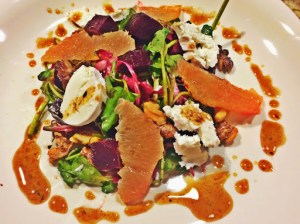
d) The Recipe


Ingredients:
Young goats cheese (for creamy sourness)
Roasted walnuts (for crunch and for savoriness (umami))
Baked beetroot (for sweetness)
Radiccho lettuce (for bitterness)
Watercress lettuce (for pepperiness)
Grape fruit (for bitterness and sweetness together with juiciness for texture)
Radish (for crunch and earthiness)

Dressing
Olive oil
Walnut oil
Balsamic Vinegar
Salt and Pepper
Thyme leaves
Lemon zest