The best chicken ever made?

If you thought cooking a chicken was taking it out of the plastic packet and sticking it in the oven, you were wrong. The following procedure tests Heston Blumenthal method of cooking a the humble chook.
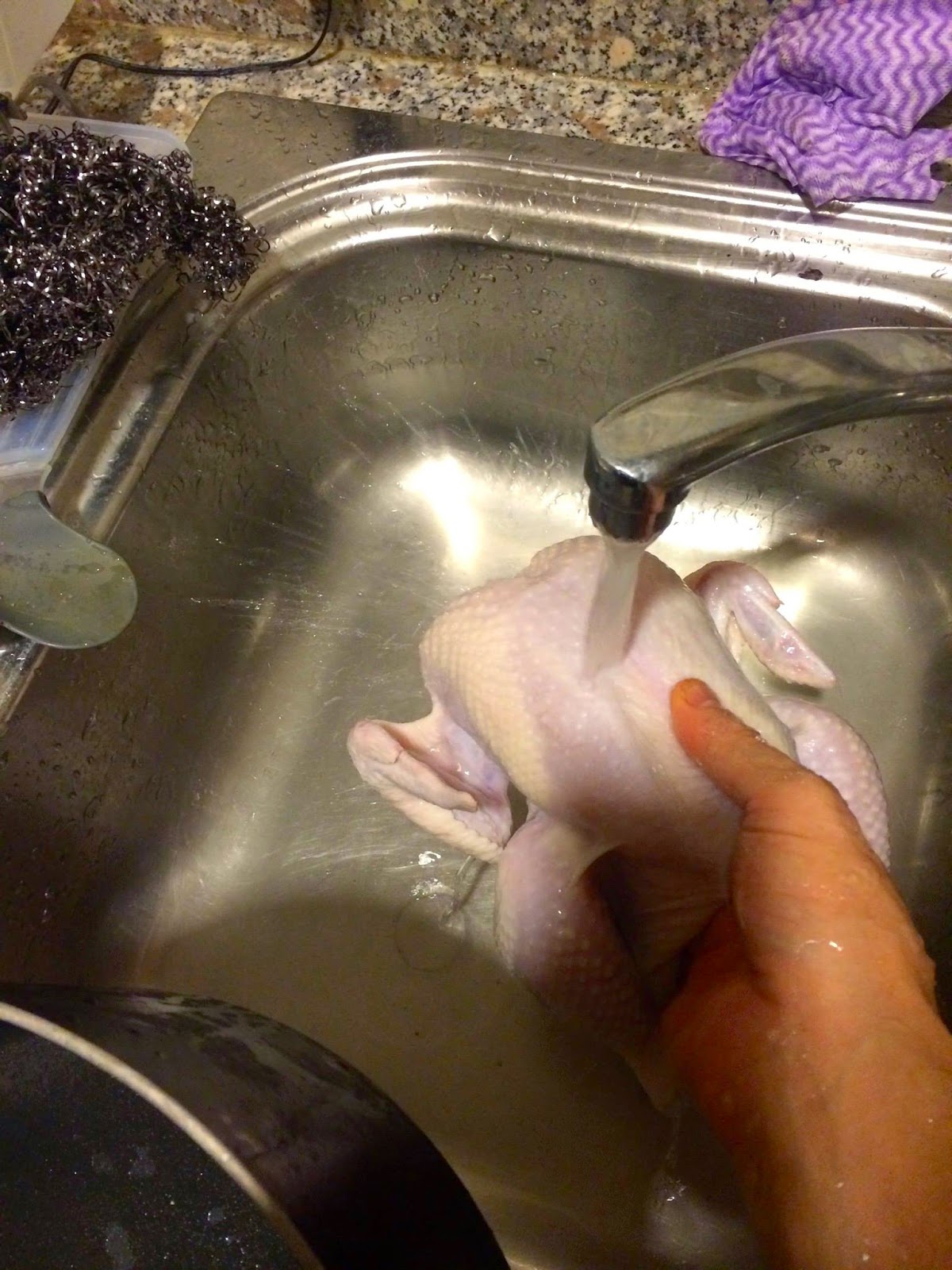
1. Brine the chicken for a number of hours. I used a 5 percent brine solution for half a day. Rinse the chicken well, I soaked it for a further hour in plain tap water.

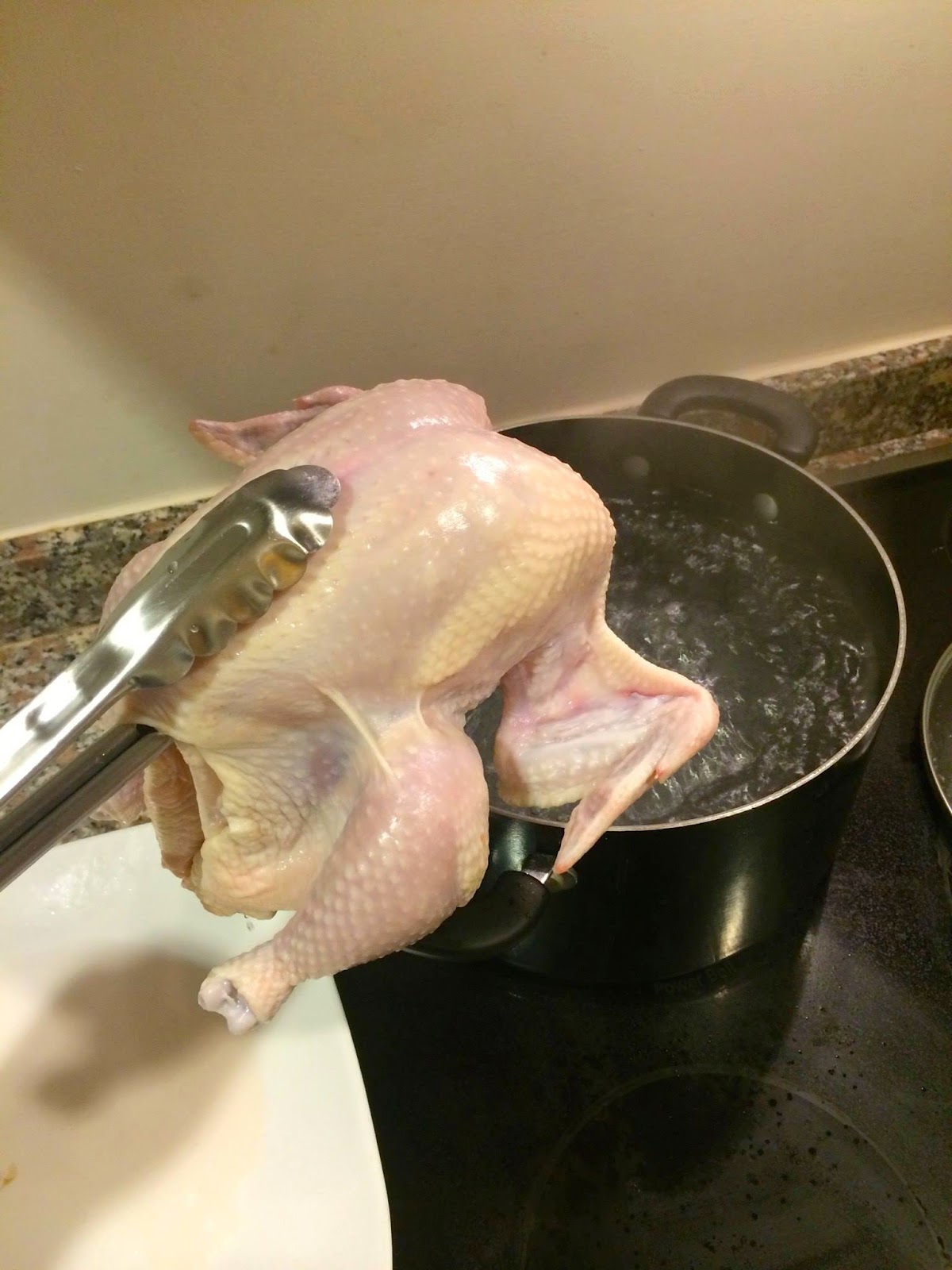
2. Copying the Chinese technique of getting crispy skin on their roast duck, the chicken is placed into boiling water for 30 seconds, and cooled in an ice bath. This perhaps releases fat under the skin thus removing moisture (? no idea really).
3. Leave the chicken in the fridge uncovered overnight to dry out the skin (below on the left re on the left after 20 hours in the fridge uncovered). 
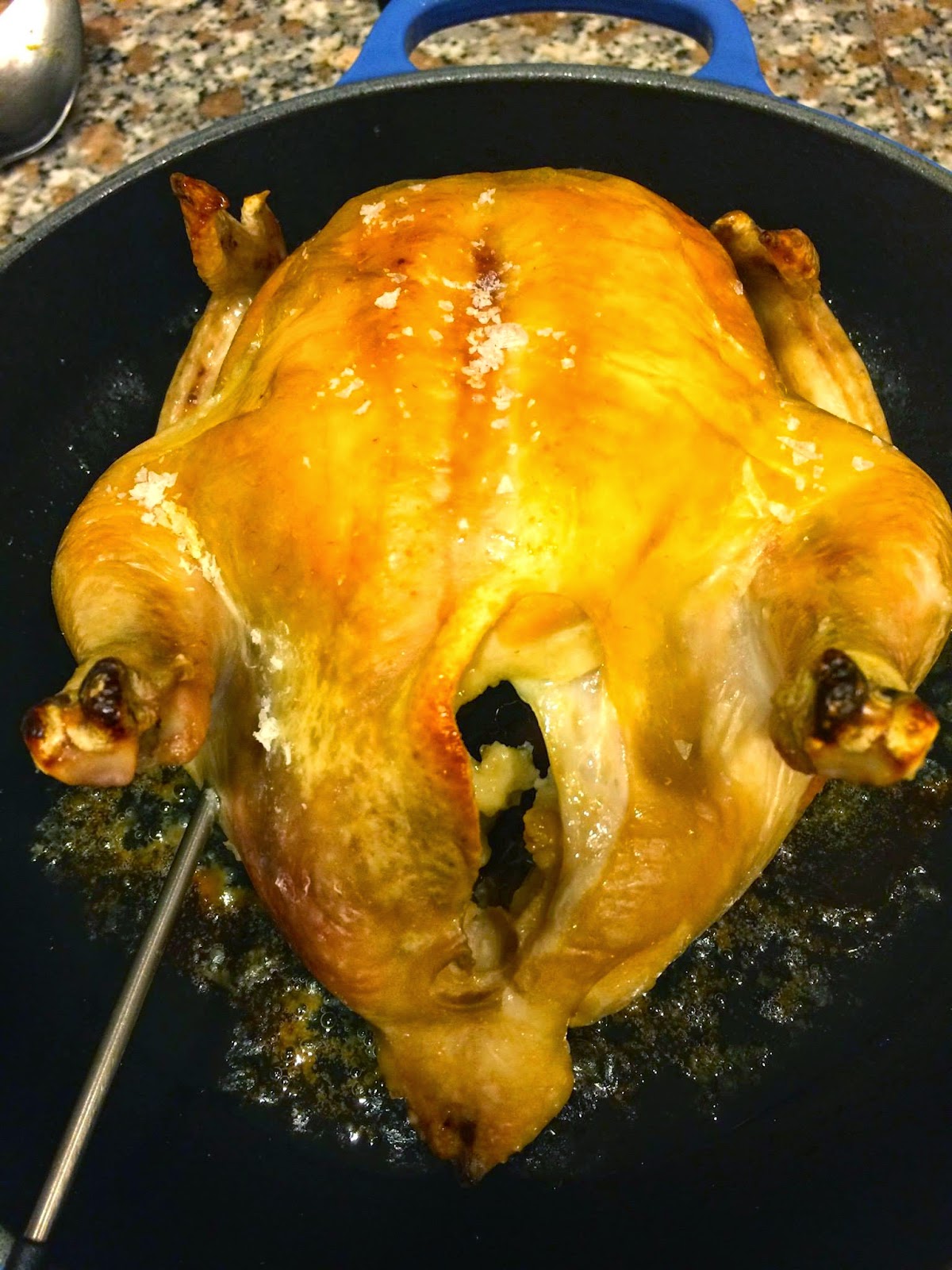
4. Place the chicken in the oven at incredibly low heat, the lowest the oven goes. I got mine to around 90 degrees Celsius until the internal temperature reaches  62 degrees. Mine took around 2 hours. See on the picture below, on the right, the chicken has no color at this stage. 

5. Rest out of the oven for around 45 minutes, then turn the oven up to as hot as it can go, at least 220 degrees celcius. Once the oven reaches temperature blast the chicken for 10-20 minutes.

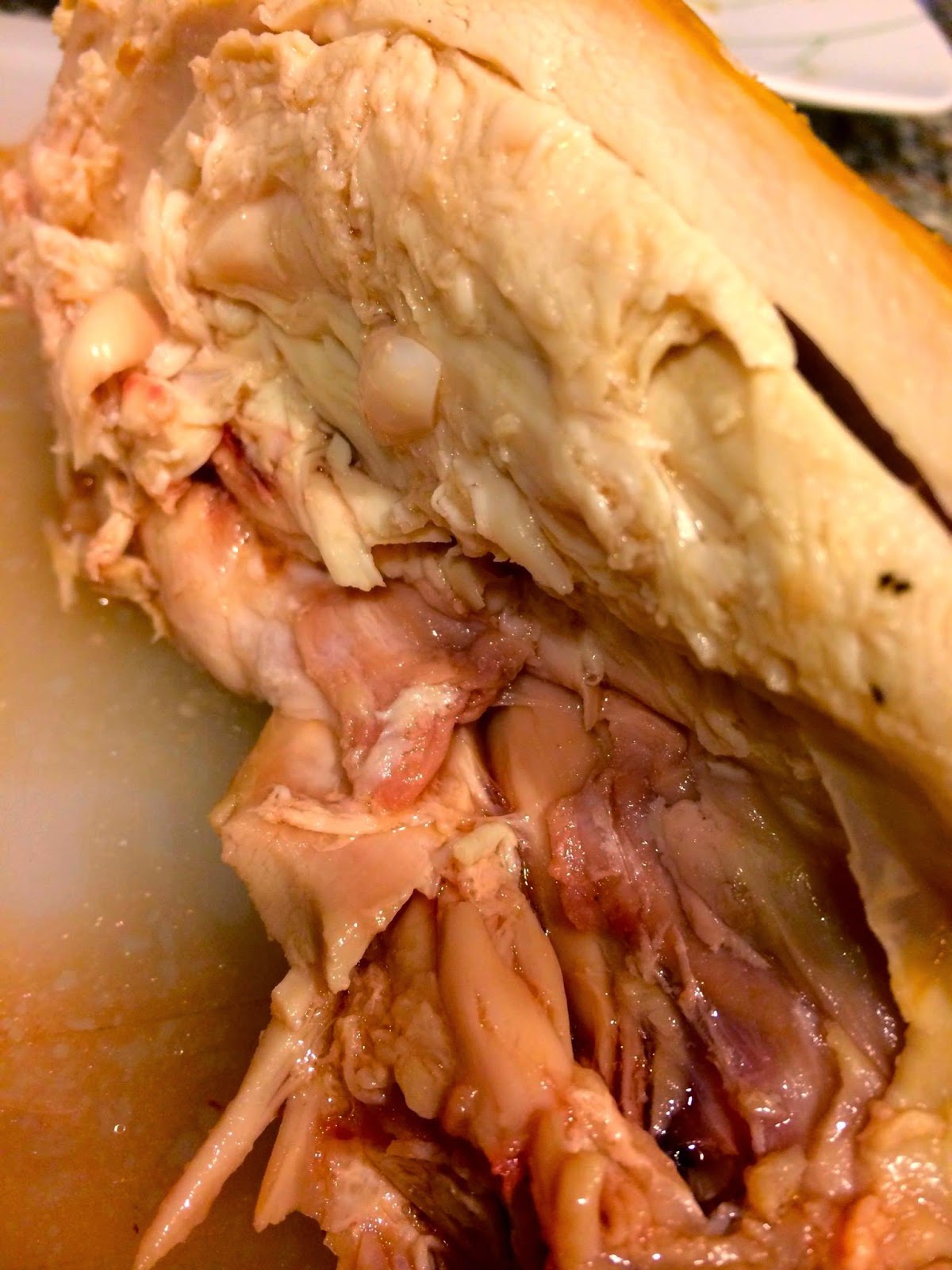
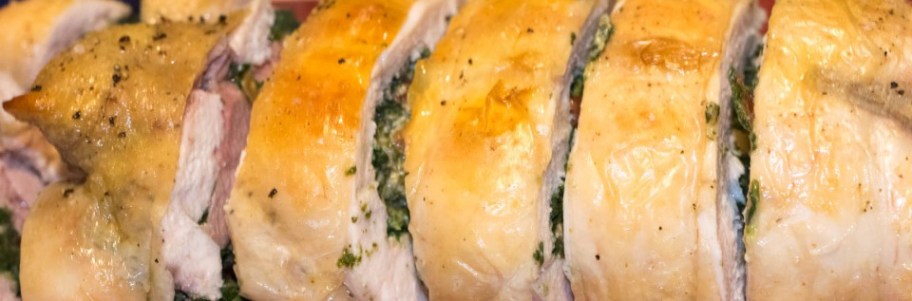
Above the juiciest bird I have ever eaten, with amazingly crispy skin. I have never had the thigh and breast perfectly cooked together. The middle picture is the underside of the breast and thigh when carved straight off the bone. The picture on the right shows the carved breast. The answer is the very low cooking temperature at the beginning. The brine also helped to keep the breast moist.

Tasting notes: A little salty, either reduce brine time, or brine concentration. Try leaving out the blanch phase, or even the rest in the fridge.

Sous vide pork belly (with ribs attached)

A very nice piece of locally sourced pork means that this recipe supports the local economy. It does not support climate change as we will see. The fuel import bill for the island may have increased to support the electricity inputs into this succulent belly. 
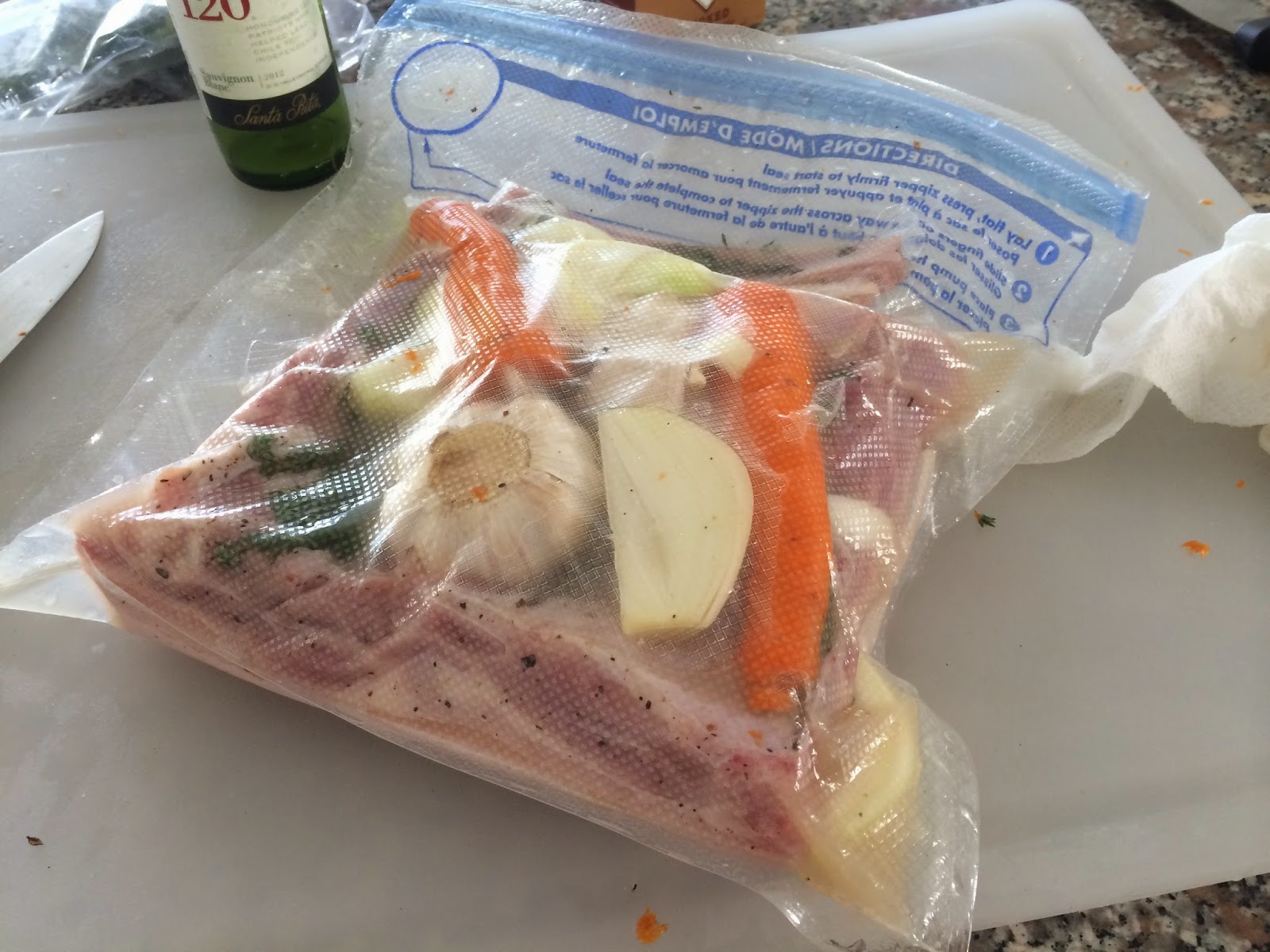
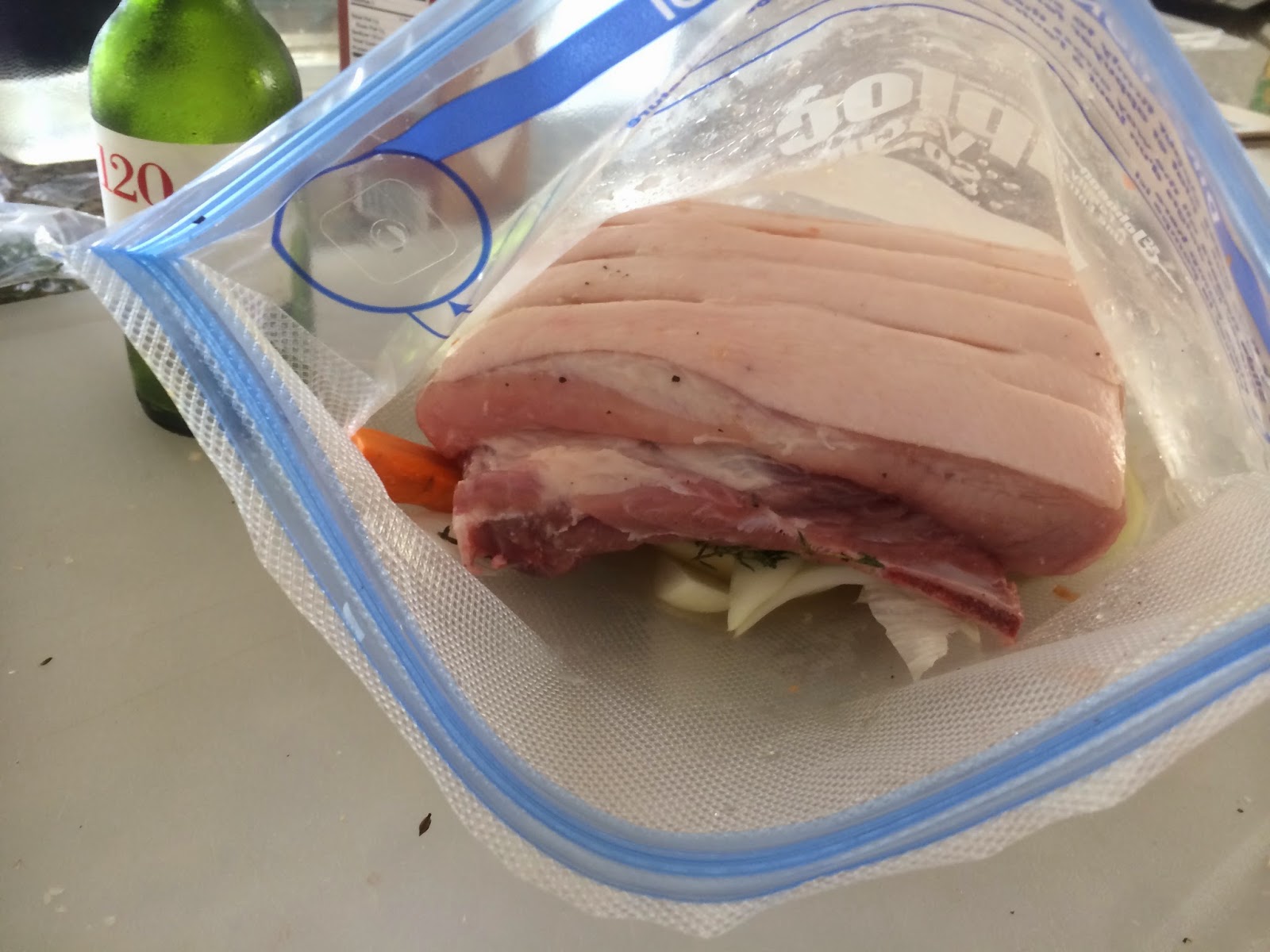
After salting and scoring the skin of the pork it proved rather difficult to vacuum seal the bag, mainly because the wine, added for acidity and flavor, wanted to come out before the air vacated. Also in the bag was garlic, thyme, onion and carrots.


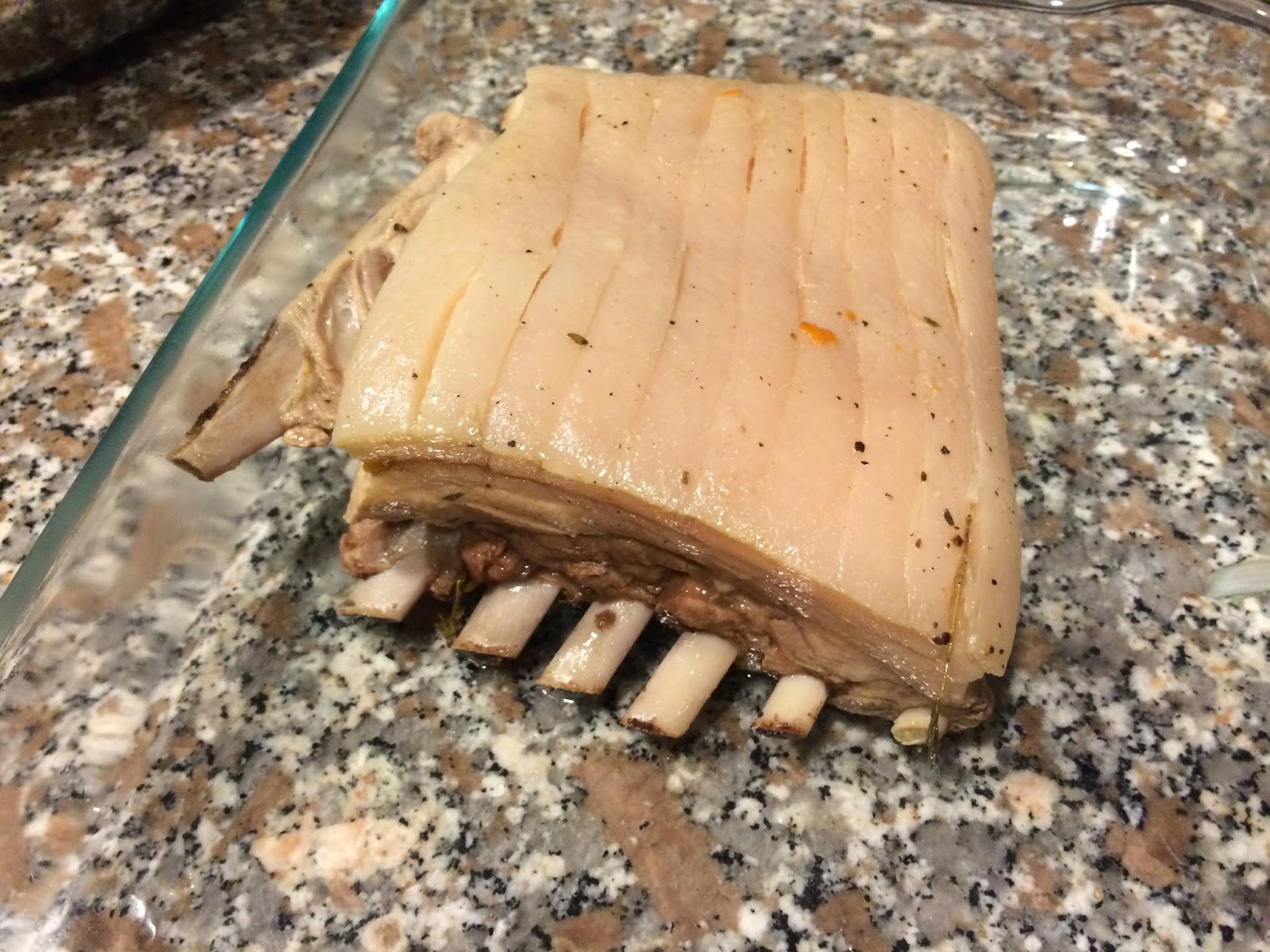
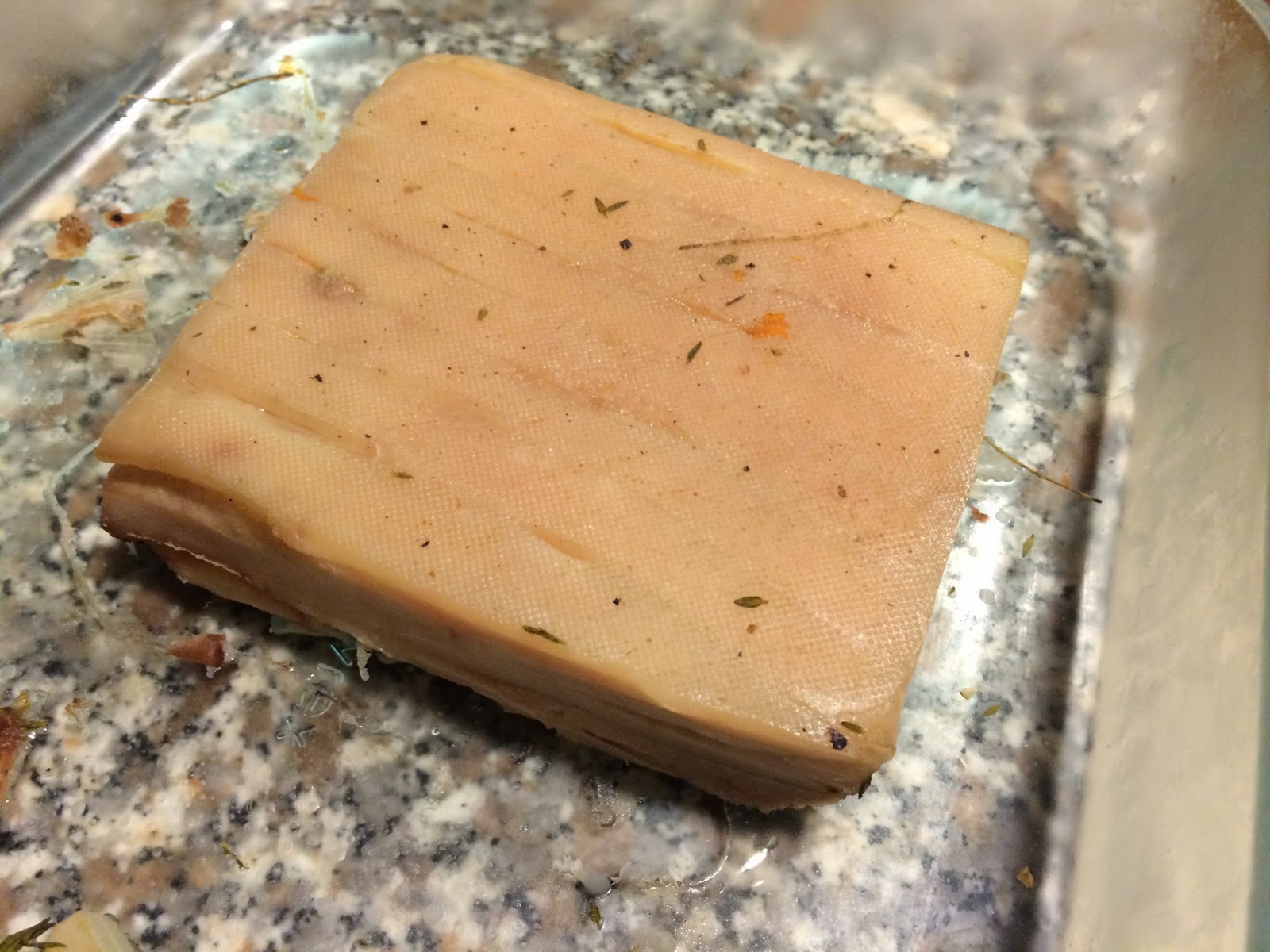
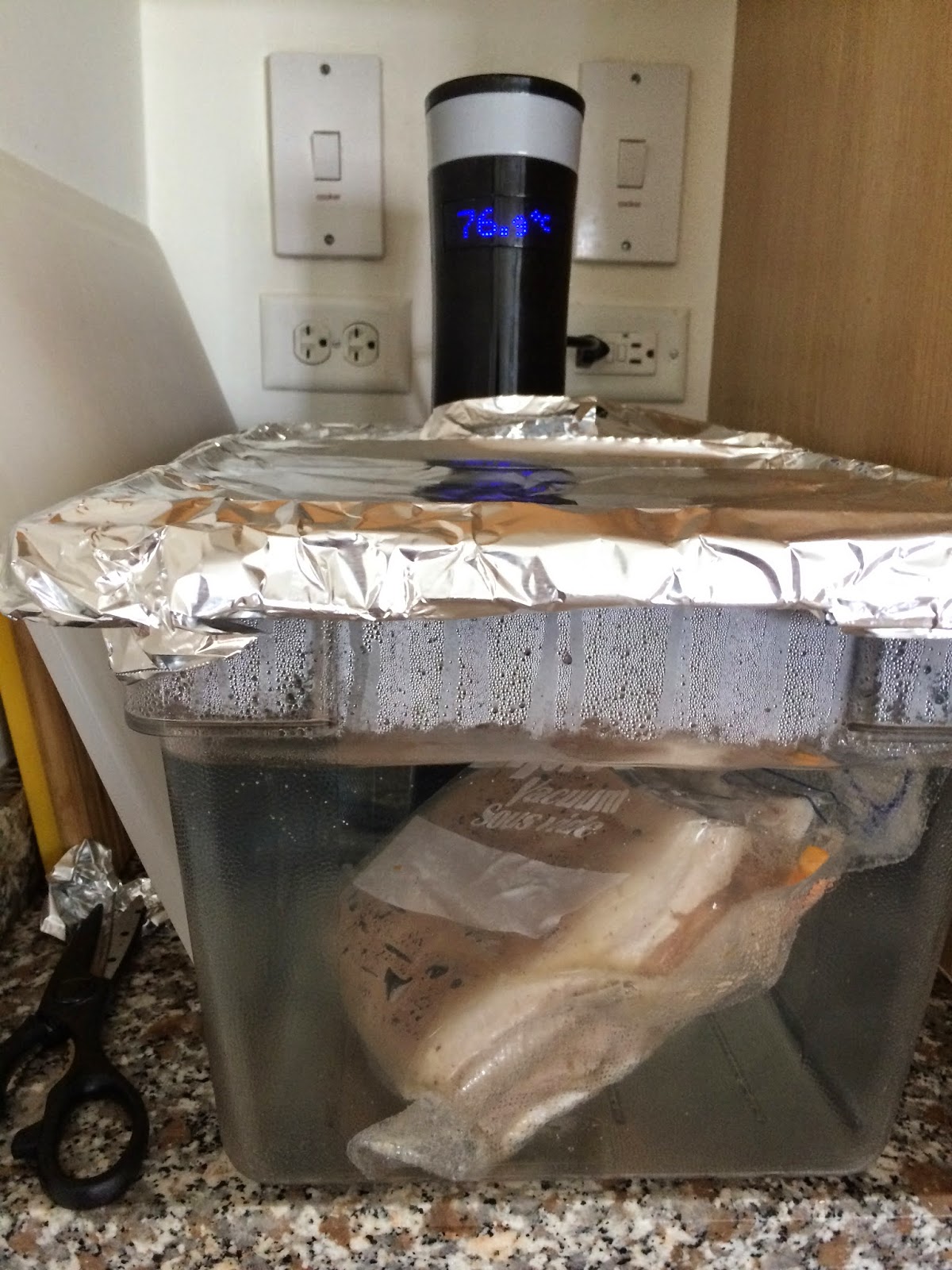
It will be hard to tell how many islands were flooded because I ran this immersion circulator for 12 hours at 77 degrees Celsius, using an incredible amount of electricity (max output 1500W).  Once removed from the vacuum bag, the ribs were removed and the pork was pressed and refrigerated overnight overnight.


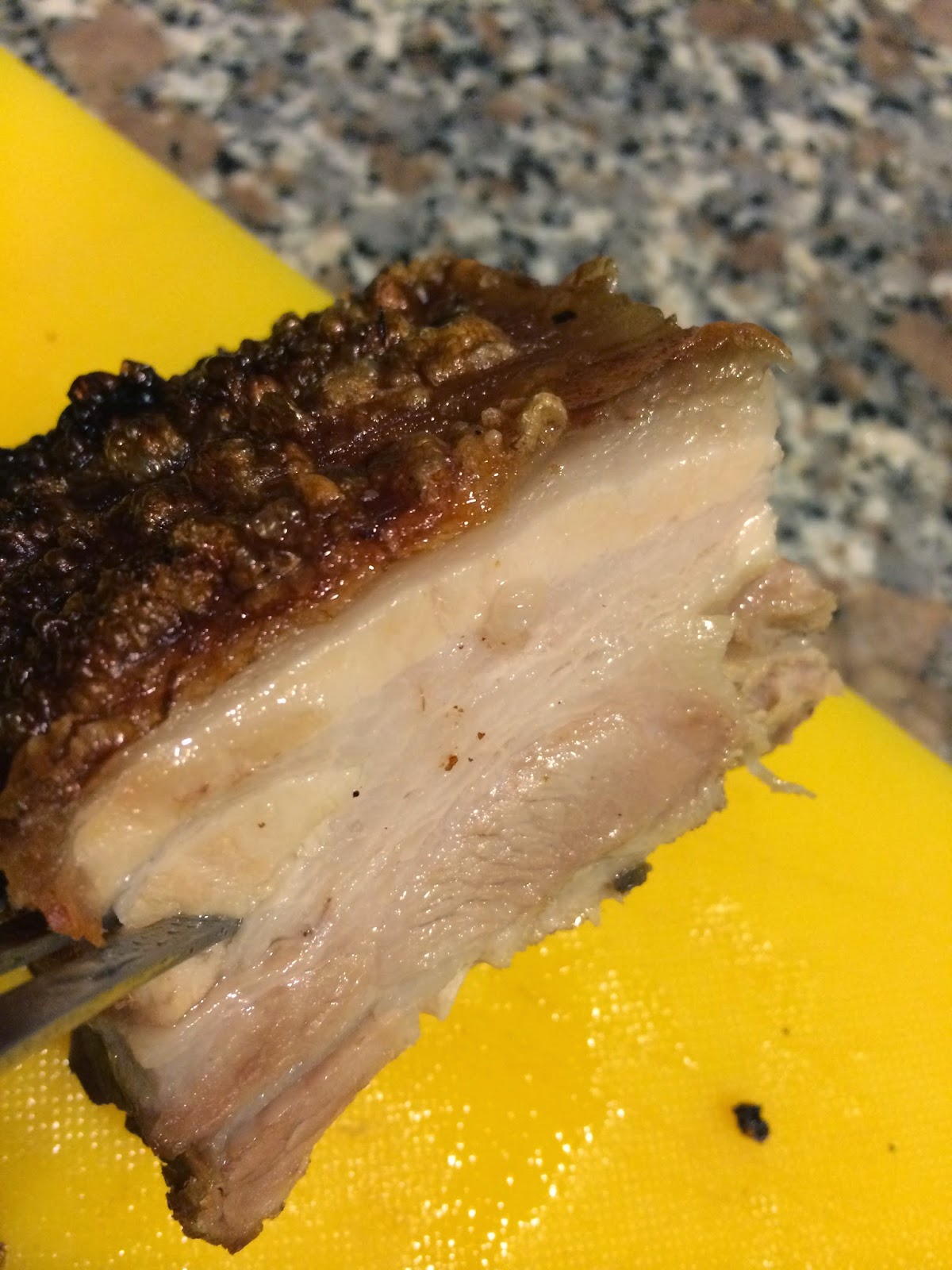
Just to add to the carbon intensity of this small meal a little more, the pork belly was then blasted at very high oven temperature for color. It was finally finished off under the broiler for a few minutes for some extra char and flavor.  Relatively juicy. 

Tasting notes: Perhaps it could have been cooking in the water bath a little longer as not as tender as desired, it was also a little dry. A 12 hour brine should be tried.